How Long Does It Take to Build a Small Business Website?
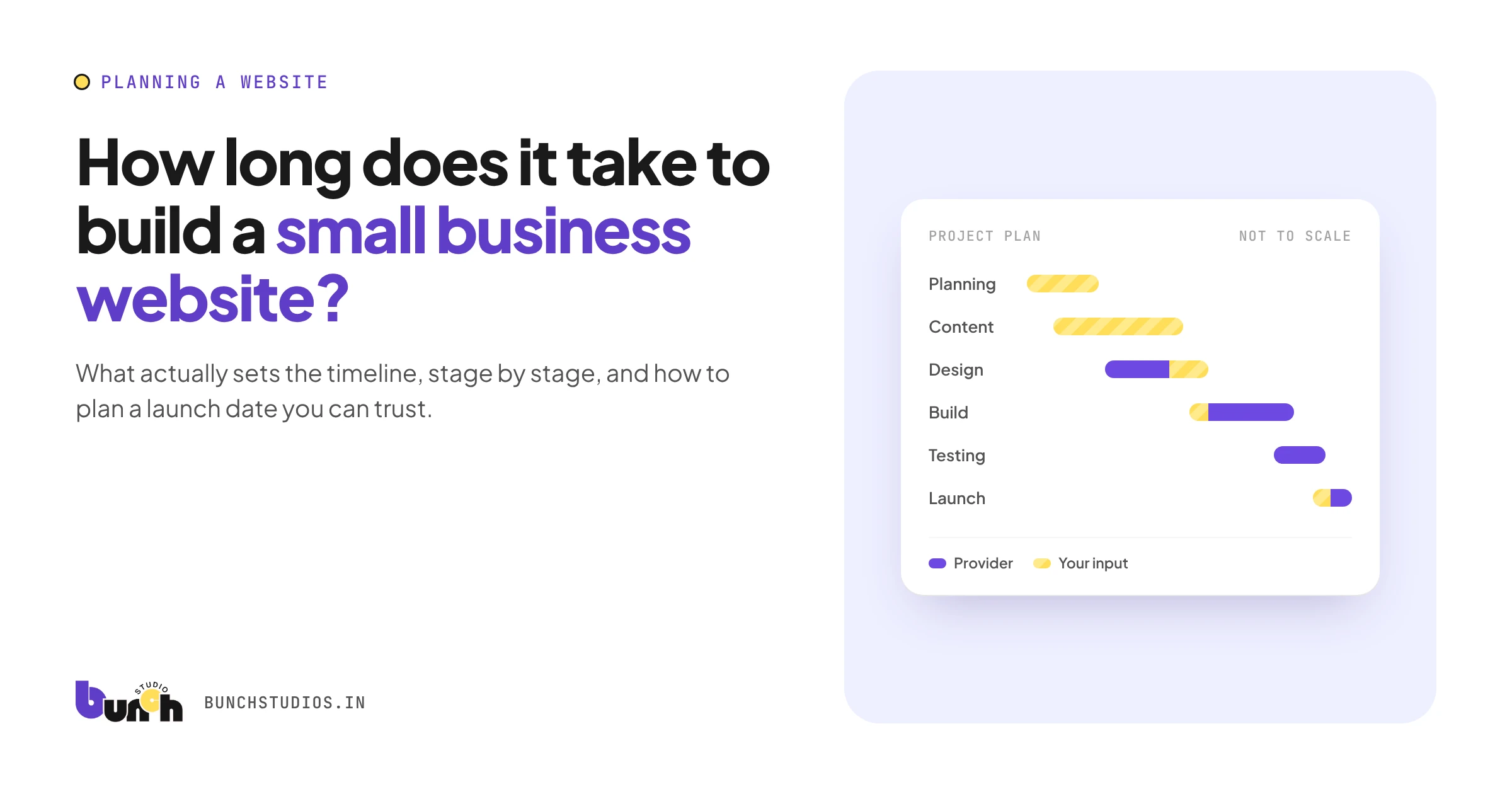
A simple site on a website builder can go live in days if your words and photos are ready. A custom-designed small business website takes longer, because it moves through planning, content, design, build, testing and launch, with your review at several points. The honest answer is that your content and your feedback usually decide the timeline more than the build does. Any provider should give you a written timeline before work starts. This guide shows what drives it, so you can judge whether that timeline is realistic.
The stages, and who each one waits on
| Stage | What happens | Usually waiting on |
|---|---|---|
| Planning | Goals, audience, which pages you need | You: answers about your business |
| Content | Words, photos, logos, documents | You, unless the provider writes it |
| Design | Layouts for phone and desktop | The designer, then your feedback |
| Build | Front end, CMS, forms, integrations | The developer, plus logins for your tools |
| Testing | Phones, browsers, forms, speed, accessibility | The provider |
| Launch | Domain, hosting, final checks | Access to your domain account |
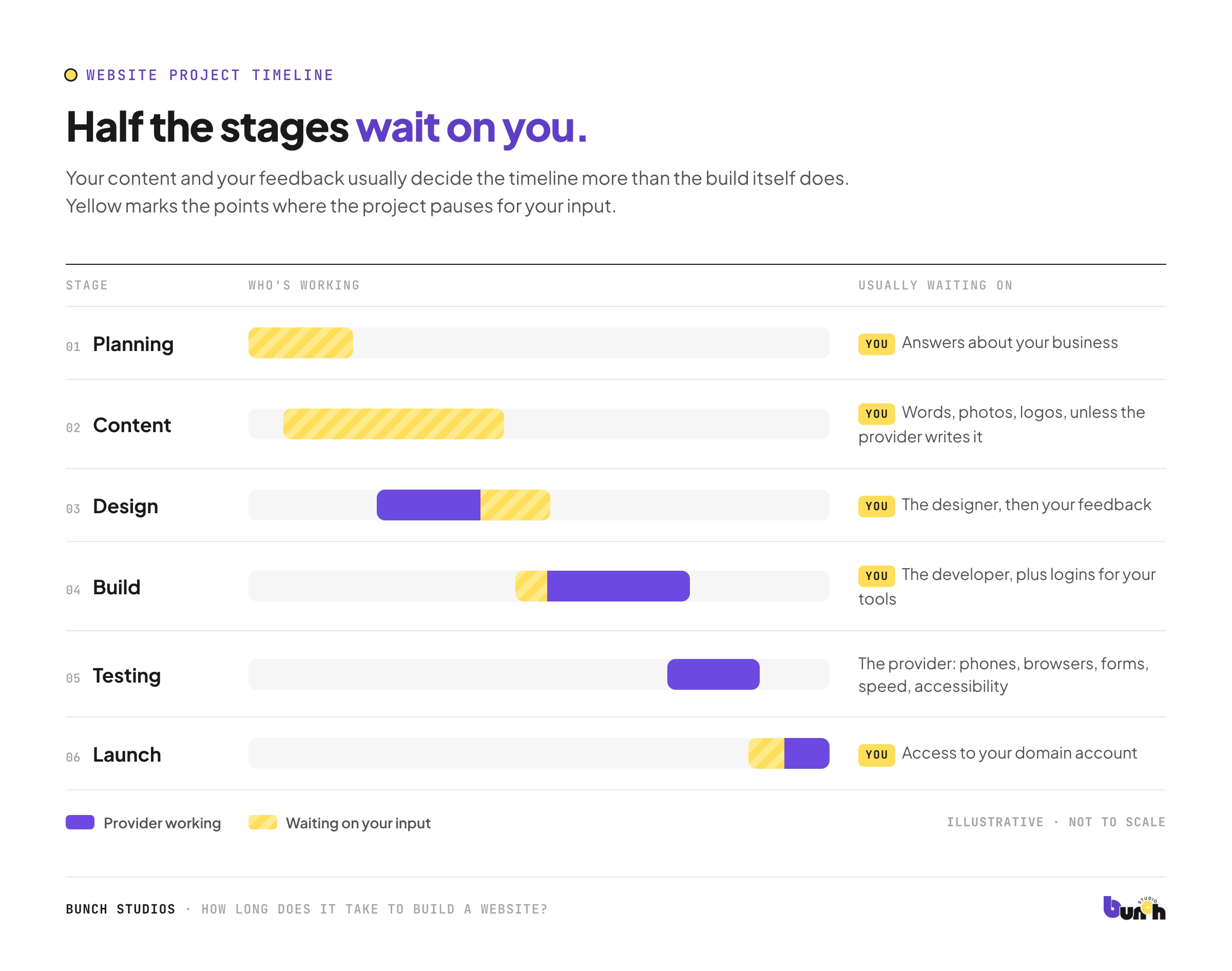
Look at the right-hand column: half the stages pause until the business owner does something.
What makes a website take longer
Content that isn't ready. This is the most common hold-up. A designer can lay out a page without final words, but the site can't launch without them. If you're writing your own copy, start on day one, not after the design is approved.
Slow or scattered feedback. A week waiting for your comments adds a week to the project. Feedback from several people who disagree adds more.
Changing scope mid-project. Adding a booking system or five new pages after the design is approved means redesigning and rebuilding. That's new work, not a slow provider.
Integrations and third-party access. Booking tools, payment processors and CRMs need accounts, logins and sometimes approval from the other company. Getting access can take longer than connecting them.
Custom design and features. A template gives you a finished layout to fill in. Custom design and features need more planning, more design rounds and more testing.
Replacing an existing site. Moving content and redirecting old page addresses adds steps. Our website redesign cost guide covers what's involved.
What speeds it up (without cutting corners)
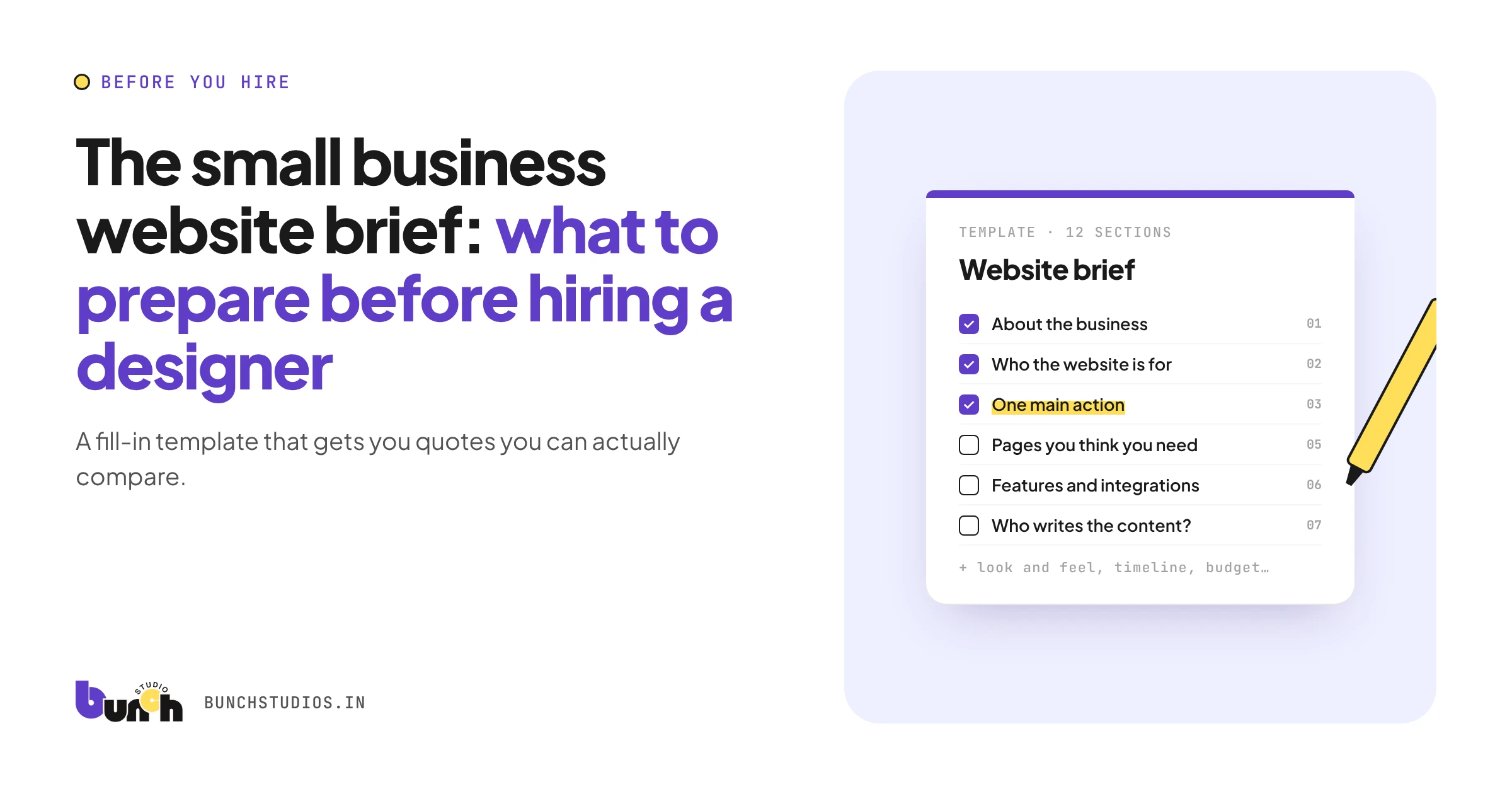
- Write a short brief before you hire anyone: goals, audience, pages, examples you like, tools you use. Our website design brief template helps.
- Name one decision-maker who gathers everyone's comments into one reply.
- Gather content early: service descriptions, team bios, photos, logo files.
- Share logins early for your domain, email, booking and payment tools.
- Hold back nice-to-haves for a second phase after launch.
Plan your launch date backwards
If you have a deadline (a season, an event, a product launch), work backwards:
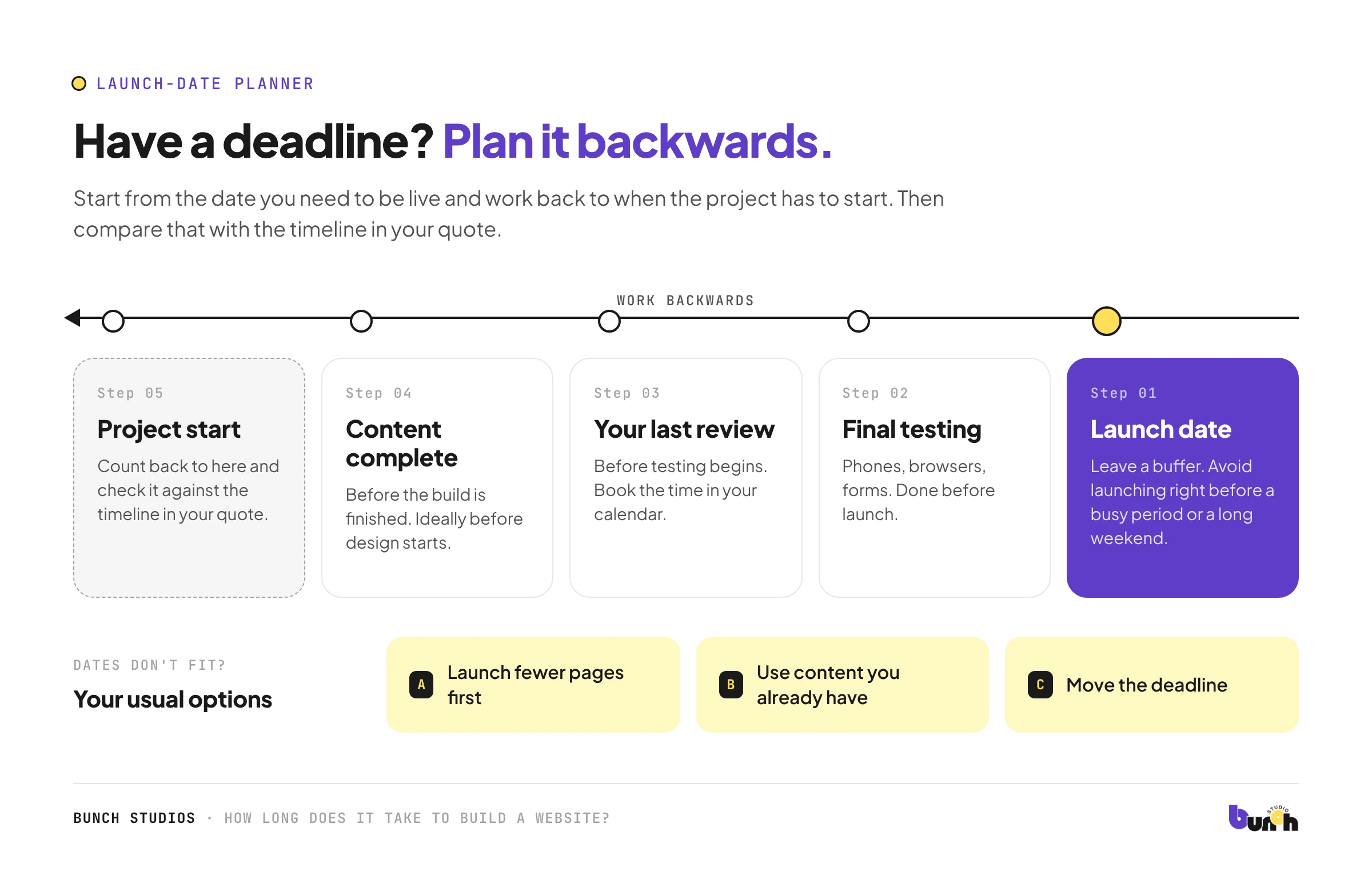
- Launch date: leave a buffer. Avoid launching right before a busy period or a long weekend, when nobody is around to fix problems.
- Final testing: before launch.
- Your last review: before testing.
- Content complete: before the build finishes, ideally before design starts.
- Project start: count back from there and compare it with the timeline in your quote.
If the dates don't fit, the usual options are launching fewer pages first, using content you already have, or moving the deadline.
After launch: Google doesn't see it instantly
Going live isn't the same as appearing in search. Google says crawling a new or changed page "can take anywhere from a few days to a few weeks" (Google Search Central). If search visibility matters for your launch date, allow for that, and make sure the site is set up in Google Search Console.
Questions to ask about any quoted timeline
- What does this timeline assume I'll provide, and by when?
- How many review rounds are included, and how long do I have for each?
- What happens to the date if my content or feedback is late?
- Which parts depend on third parties (domain, booking tool, payments)?
- Is testing on phones and different browsers included?
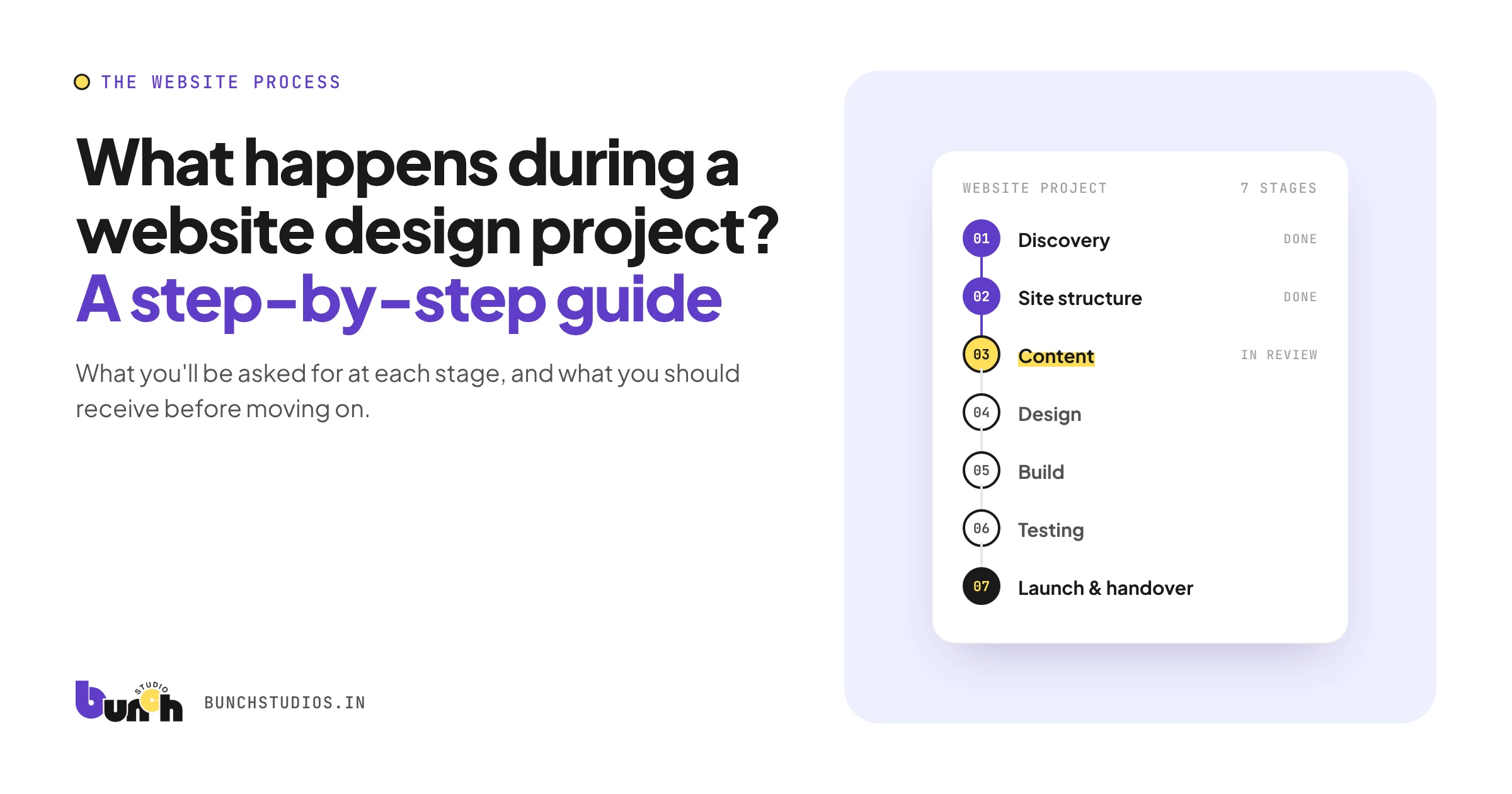
A timeline with clear assumptions is more trustworthy than a short one without any. For what happens at each stage, see what happens during a website design project.
How Bunch Studios sets a timeline
We don't quote a standard turnaround, because it depends on your scope and how quickly content and feedback come in. Instead:
- Intro call: we learn about your business, customers and goals.
- Written scoped estimate: scope, price and timeline in writing before any work starts.
- Design and build: you review the designs and the working site at set points.
- Launch and handover: we launch, show you how to use your CMS and hand over access, or keep managing the site for you.
If you don't have copy ready, we can draft it with AI-assisted writing from what you tell us, and you approve every page. That often removes the biggest delay.
Request a Scoped EstimateHow we made this guide: researched and drafted with AI assistance and checked against the source linked above.