What Happens During a Website Design Project? A Step-by-Step Guide
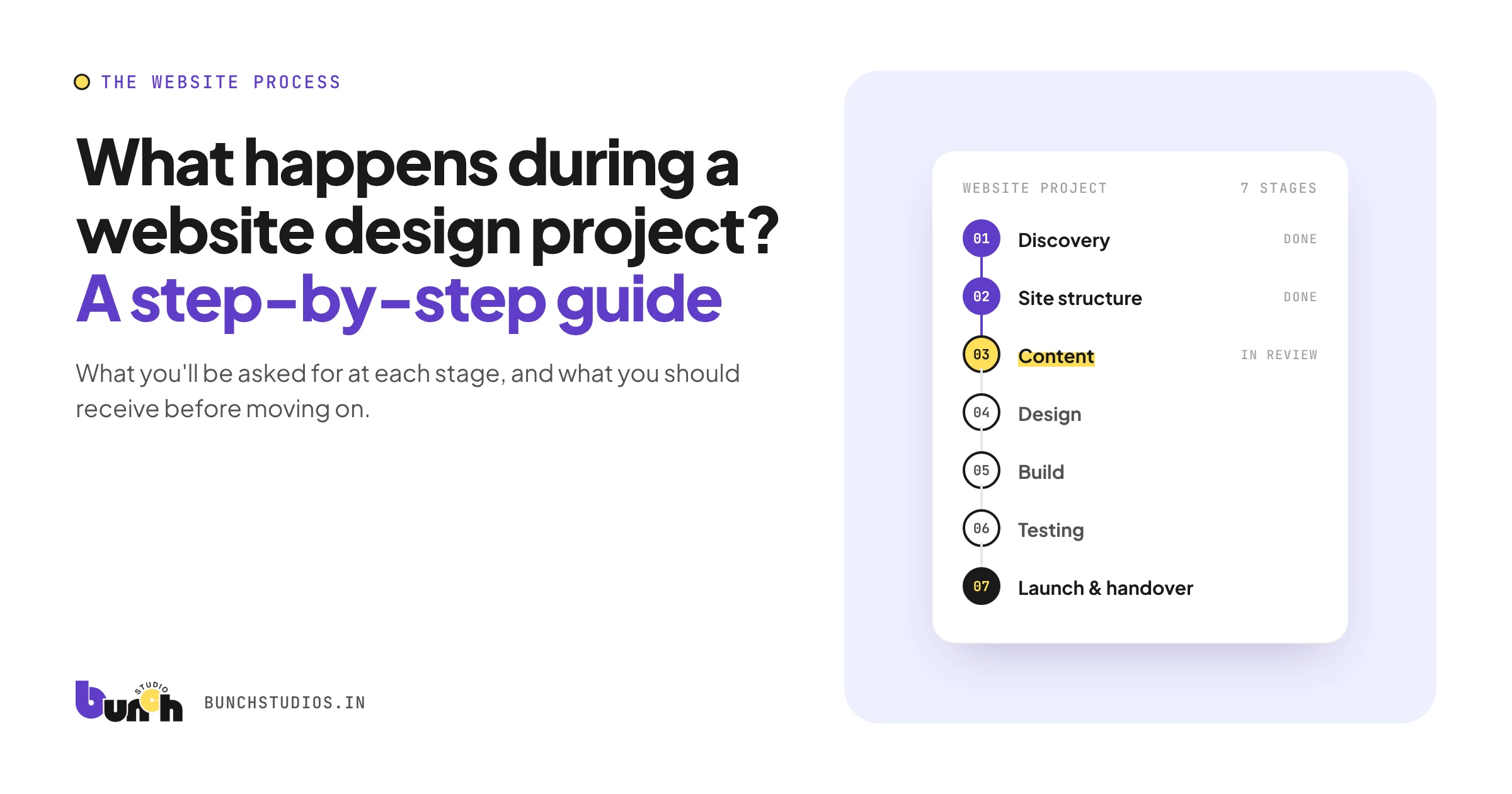
A small business website project usually moves through seven stages: discovery, planning the site structure, content, design, build, testing, and launch with handover. Every provider names and groups these differently, but the work underneath is much the same. What matters to you is what you'll be asked for at each step and what you should receive before moving to the next. This guide walks through both, so you know what a good process looks like before you hire anyone.
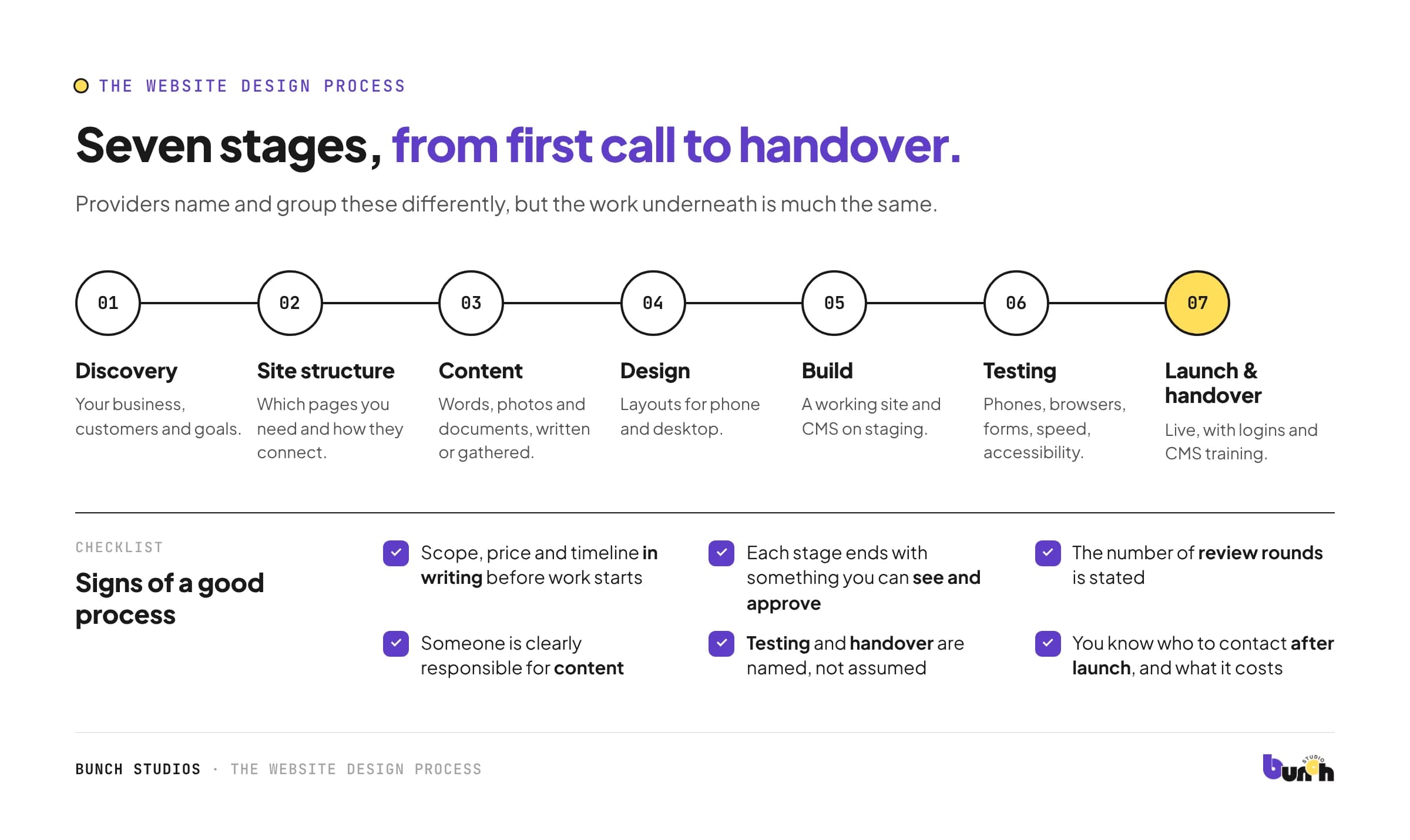
The stages at a glance
| Stage | What happens | What you're asked for | What you should receive |
|---|---|---|---|
| 1. Discovery | Understanding your business, customers and goals | Time for a call; honest answers | A written scope |
| 2. Site structure | Deciding which pages you need and how they connect | Your services, priorities, examples you like | A sitemap |
| 3. Content | Writing or gathering words, photos and documents | Your copy, or the facts to write it from | Page copy to approve |
| 4. Design | Layouts for phone and desktop | One consolidated round of feedback | Mockups or a clickable prototype |
| 5. Build | Turning designs into a working site and CMS | Logins for tools to connect | A working staging site |
| 6. Testing | Checking phones, browsers, forms, speed, accessibility | A final review | A fixed, approved site |
| 7. Launch and handover | Going live and handing over control | Access to your domain | Live site, logins, CMS training |
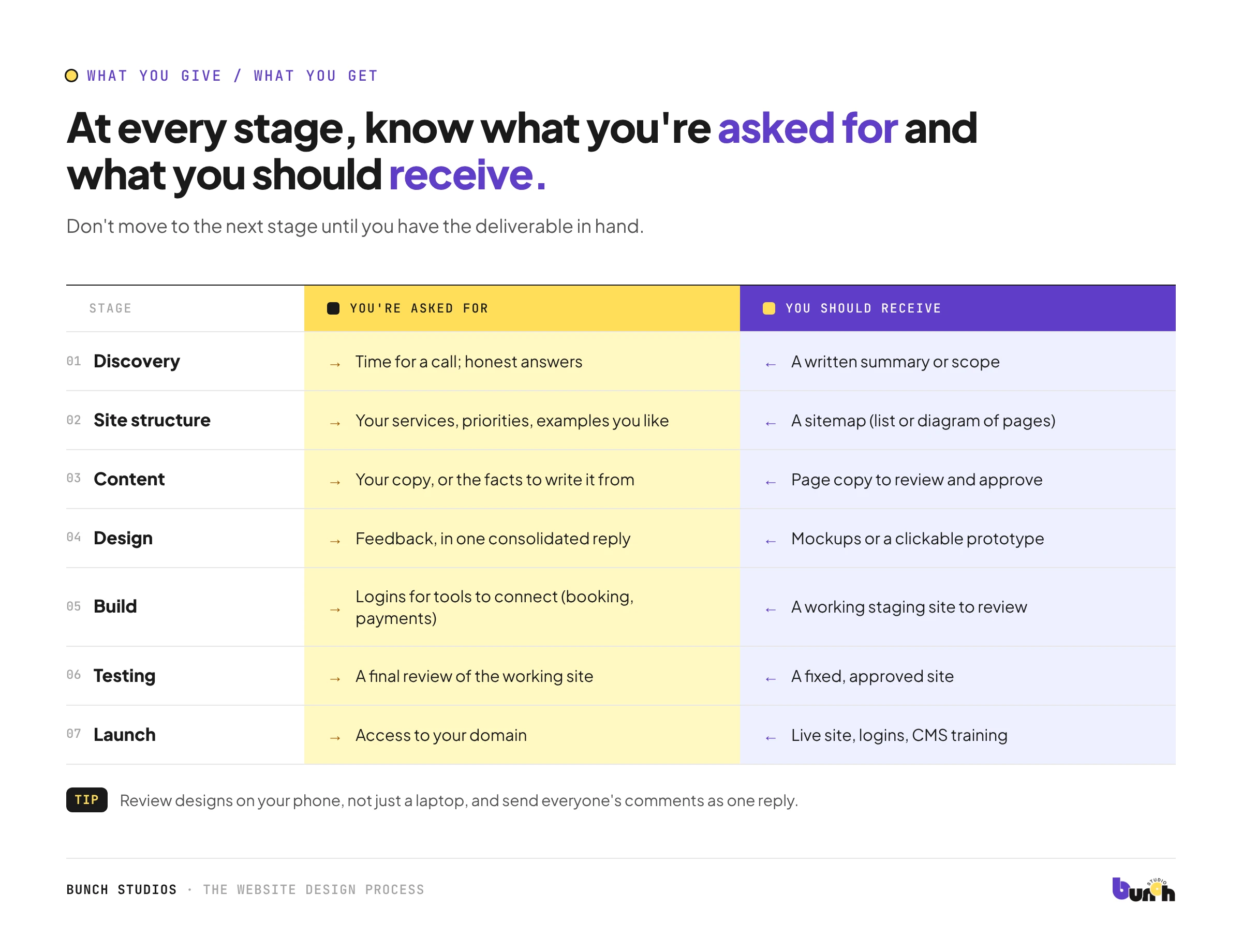
Stage by stage
1. Discovery
The provider should ask more questions than they answer: who your customers are, what you want them to do on the site, what's not working now, and what has to connect to it. If a provider quotes a price without asking these, the quote is a guess.
Before you move on: the scope in writing, covering what's included, what isn't, the price and the timeline.
2. Site structure
This is where the list of pages, and how visitors move between them, gets decided. Changing a sitemap is far cheaper than changing a finished design, so this is the time to add or cut pages.
3. Content
Content is often treated as something to "drop in later," and it's the most common reason projects stall. Good processes either start content early or have the provider write it from information you give them. Either way, you approve every page.
4. Design
You'll usually see the homepage and one or two key pages first, then the rest once the direction is agreed. Review on your phone, not just a laptop.
Tip: collect everyone's comments and send one reply. Conflicting feedback from several people is the fastest way to add rounds.
5. Build
The developer builds the site on a private "staging" version, connects your tools, and sets up the CMS you'll use to edit it. You'll be asked for logins to the tools you already use.
6. Testing
Before launch, the site should be checked on different phones and browsers, every form should deliver to the right inbox, pages should load quickly, and the site should work with a keyboard and screen readers. Ask what testing is included; it should be named in the scope.
7. Launch and handover
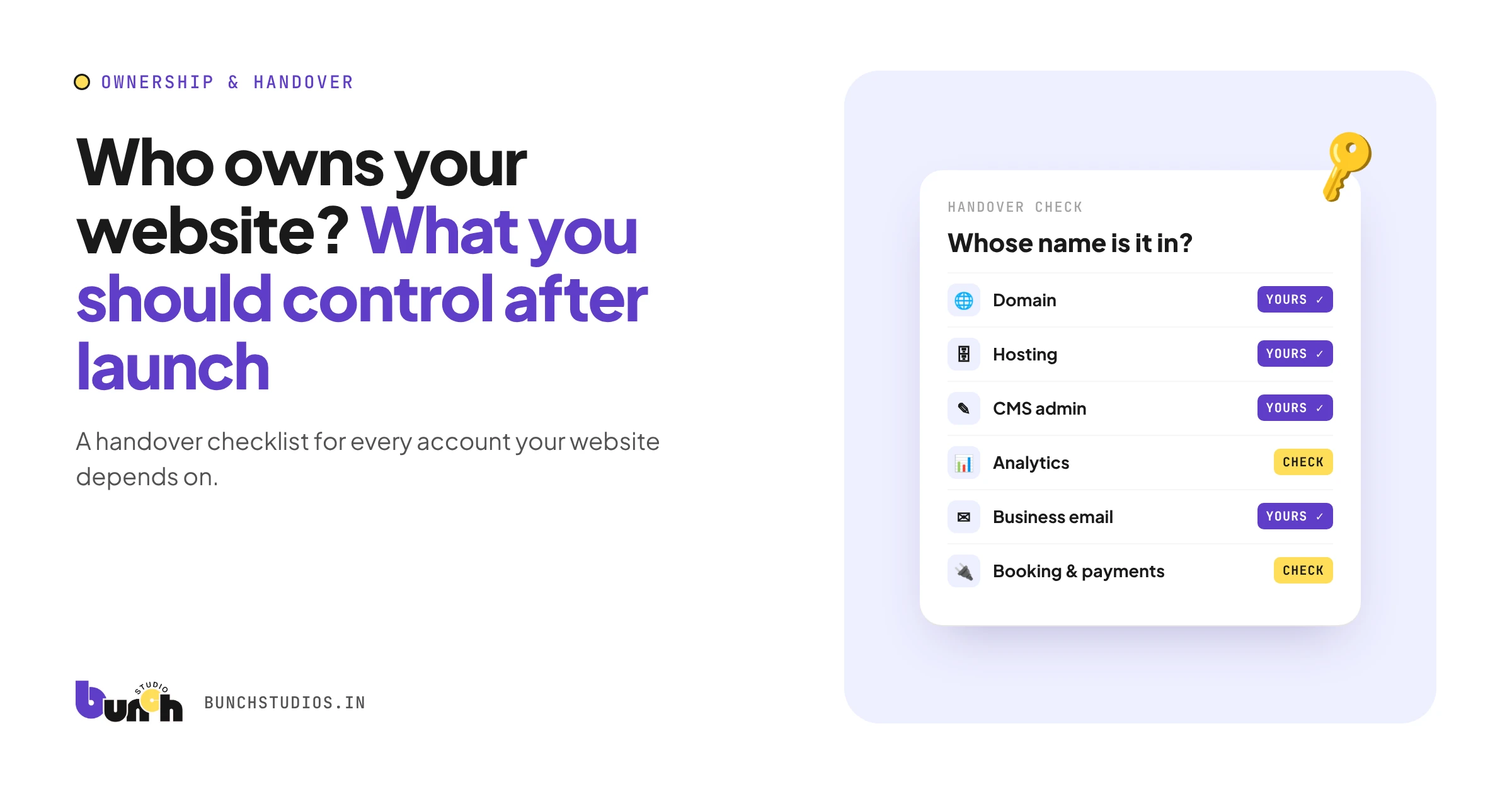
The site goes live on your domain. A proper handover means you leave with every login, ownership of the domain and site, and enough training to update it yourself. Our website ownership and handover checklist lists what to collect.
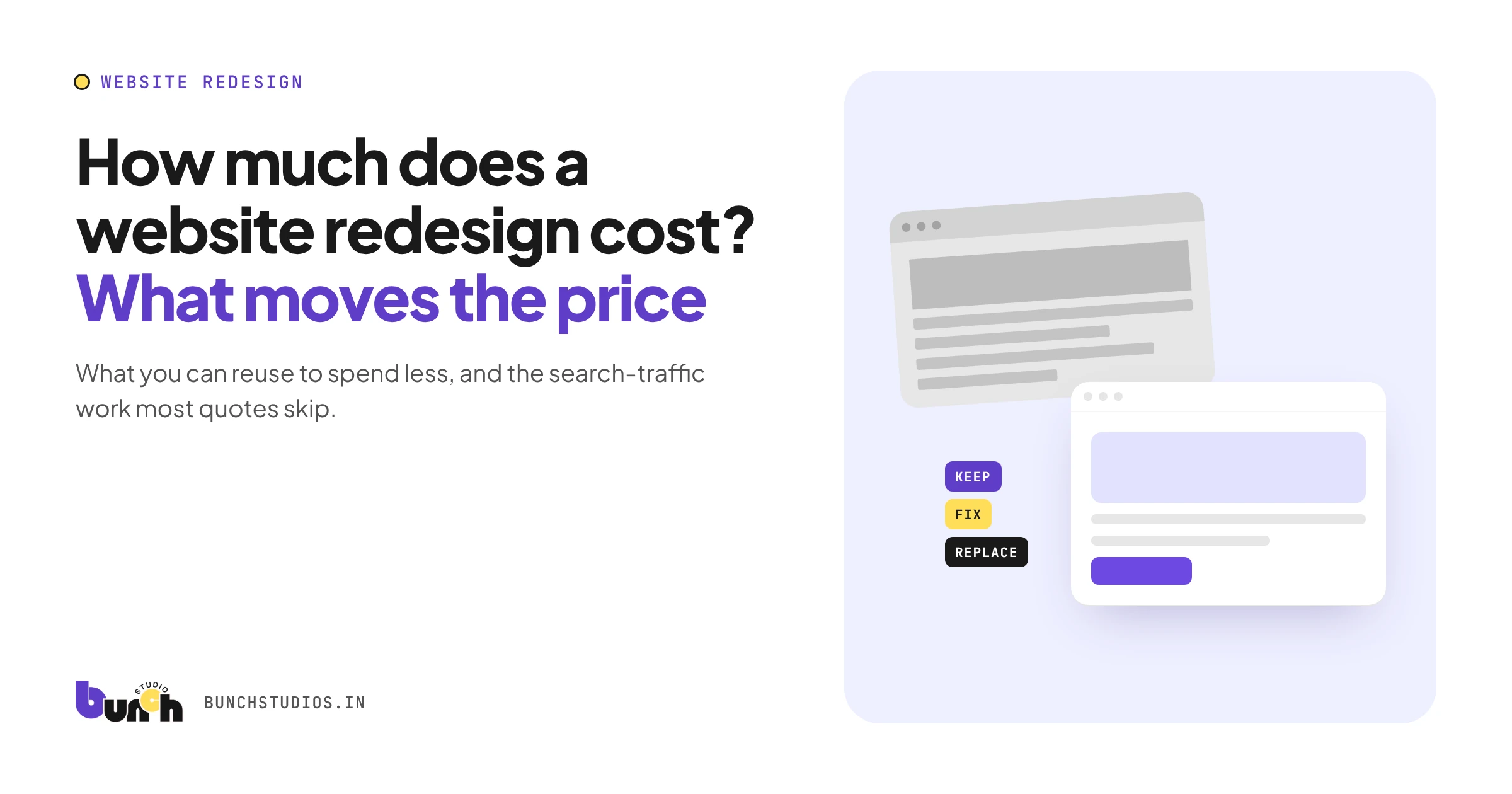
If you're replacing an old site, launch also includes redirecting old page addresses so visitors and search engines find the new pages. See our redesign cost guide.
What the written scope should cover
Before you sign, the scope should name: the pages and features included, who writes the content, how many design review rounds you get, what testing happens, what you receive at handover, who owns the site afterwards, and what support after launch costs. Anything missing is a question to ask now, not a surprise later.
Signs of a good process
- You get the scope, price and timeline in writing before work starts.
- Each stage ends with something you can see and approve.
- The number of review rounds is stated.
- Someone is clearly responsible for content.
- Testing and handover are named, not assumed.
- You know who to contact after launch, and what that costs.
Bunch Studios' process
Our process follows the same logic in four steps:
- Intro call: we learn about your business, customers and goals.
- Written scoped estimate: scope, price and timeline in writing before any work starts.
- Design and build: you review the designs and the working site at set points.
- Launch and handover: we launch, show you how to use your custom CMS and hand over access, or keep managing the site for you if you prefer.
If you don't have copy, we draft it with AI-assisted writing from what you tell us, and you approve every page. You own the website.
Request a Scoped EstimateRelated: How long it takes to build a website · Web design vs. web development
How we made this guide: researched and drafted with AI assistance.