The Small Business Website Brief: What to Prepare Before Hiring a Designer
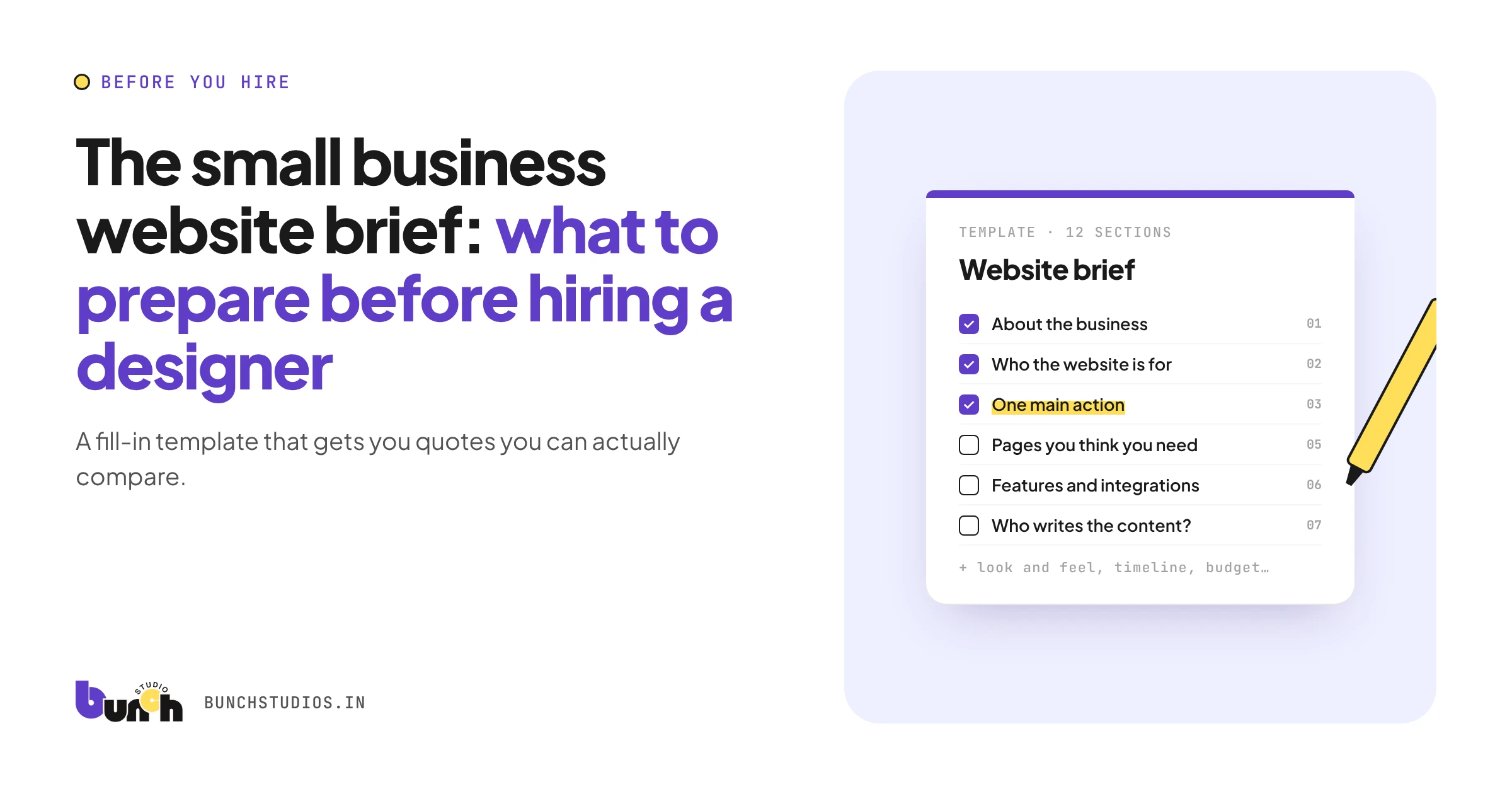
A website design brief is a one- or two-page document that tells a designer what your business does, who the site is for, what it needs to achieve, which pages and features you need, and your timeline and constraints. Writing one before you contact anyone gets you quotes you can actually compare, fewer surprises mid-project, and a faster start. You don't need design knowledge to write it. The template below covers everything a designer needs.
Why a brief saves you time and money
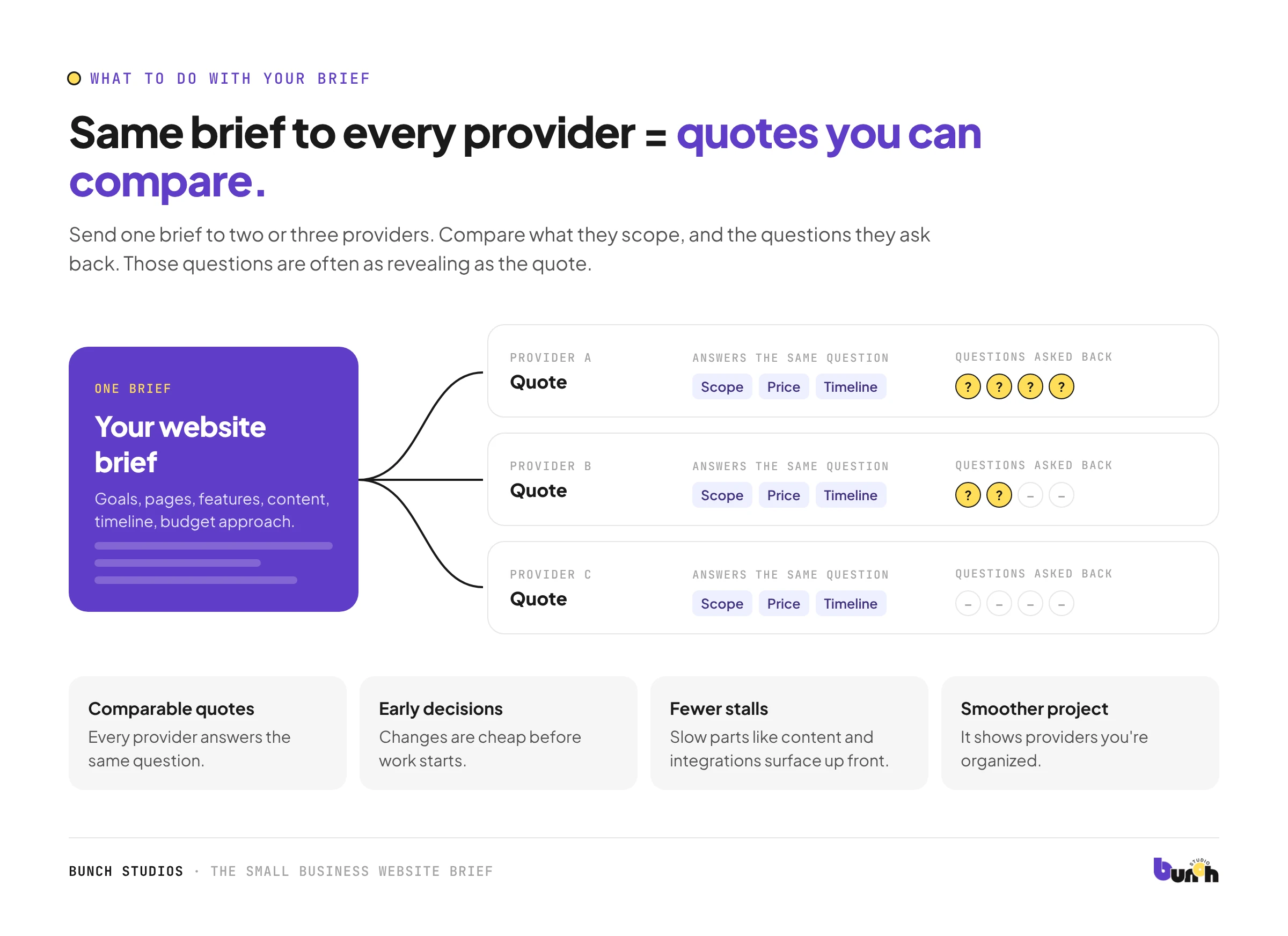
- Every provider answers the same question, so quotes become comparable.
- It forces decisions early, when changes are cheap.
- It surfaces the slow parts (content, integrations) before they hold up the project.
- It shows providers you're organized, which usually makes for a smoother project.
The brief template
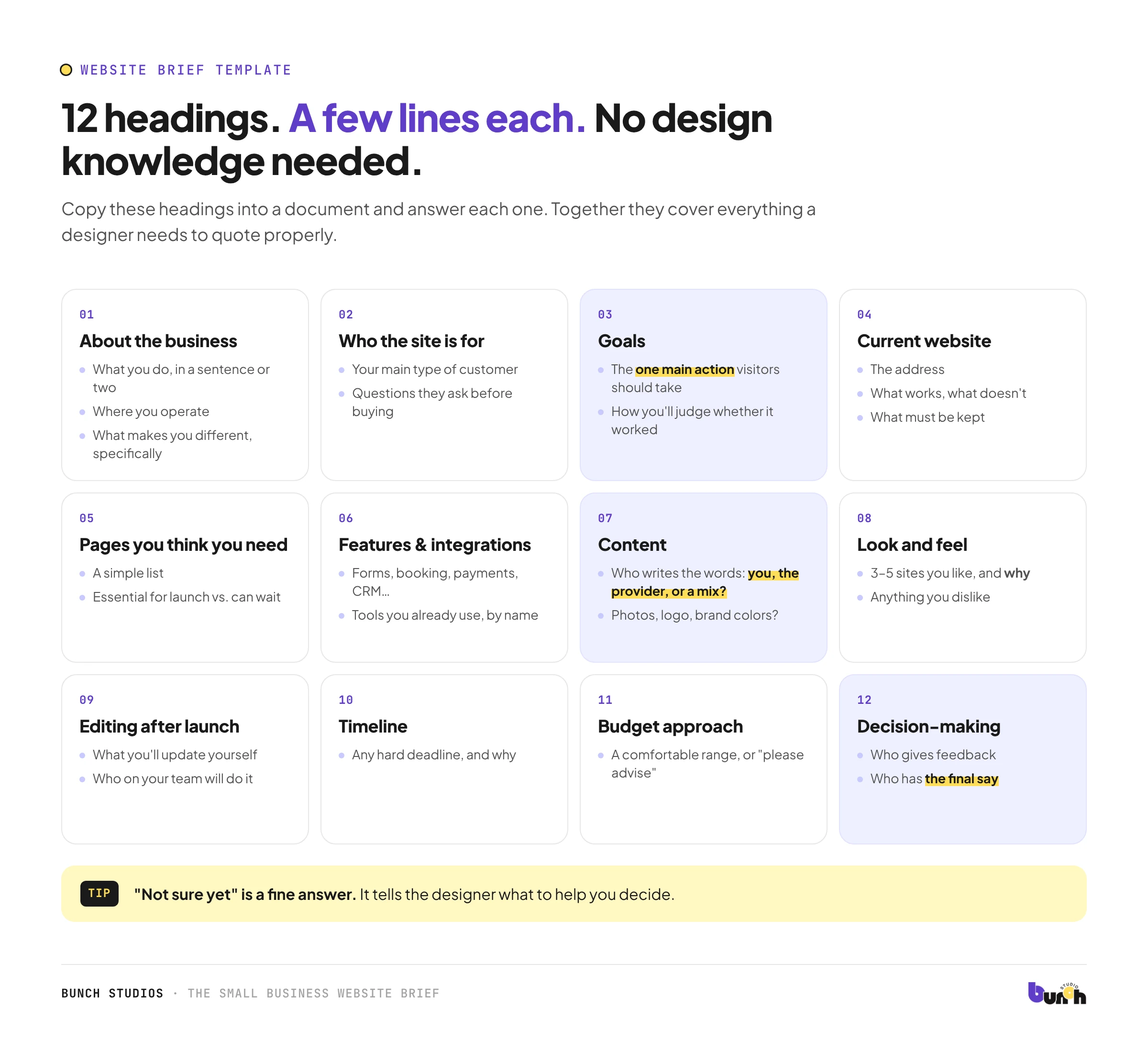
Copy these headings into a document and answer each in a few lines. "Not sure yet" is a fine answer; it tells the designer what to help you decide.
1. About the business
- What you do, in one or two sentences.
- Where you operate (cities, states, nationwide, online).
- What makes you different from competitors, specifically.
2. Who the website is for
- Your main type of customer, and what they're looking for when they find you.
- Questions they usually ask before buying.
3. Goals
- The one main action you want visitors to take (call, book, request a quote, buy).
- How you'll judge whether the site worked, such as more enquiries or fewer repetitive phone questions.
4. Current website (if you have one)
- The address, what works and what doesn't.
- What must be kept (content, page addresses, features).
5. Pages you think you need
- A simple list (Home, Services, About, Contact, FAQ, Blog...).
- Mark which are essential for launch and which can wait.
6. Features and integrations
- Forms, booking, payments, newsletter signup, CRM, maps, reviews.
- The tools you already use, by name.
7. Content
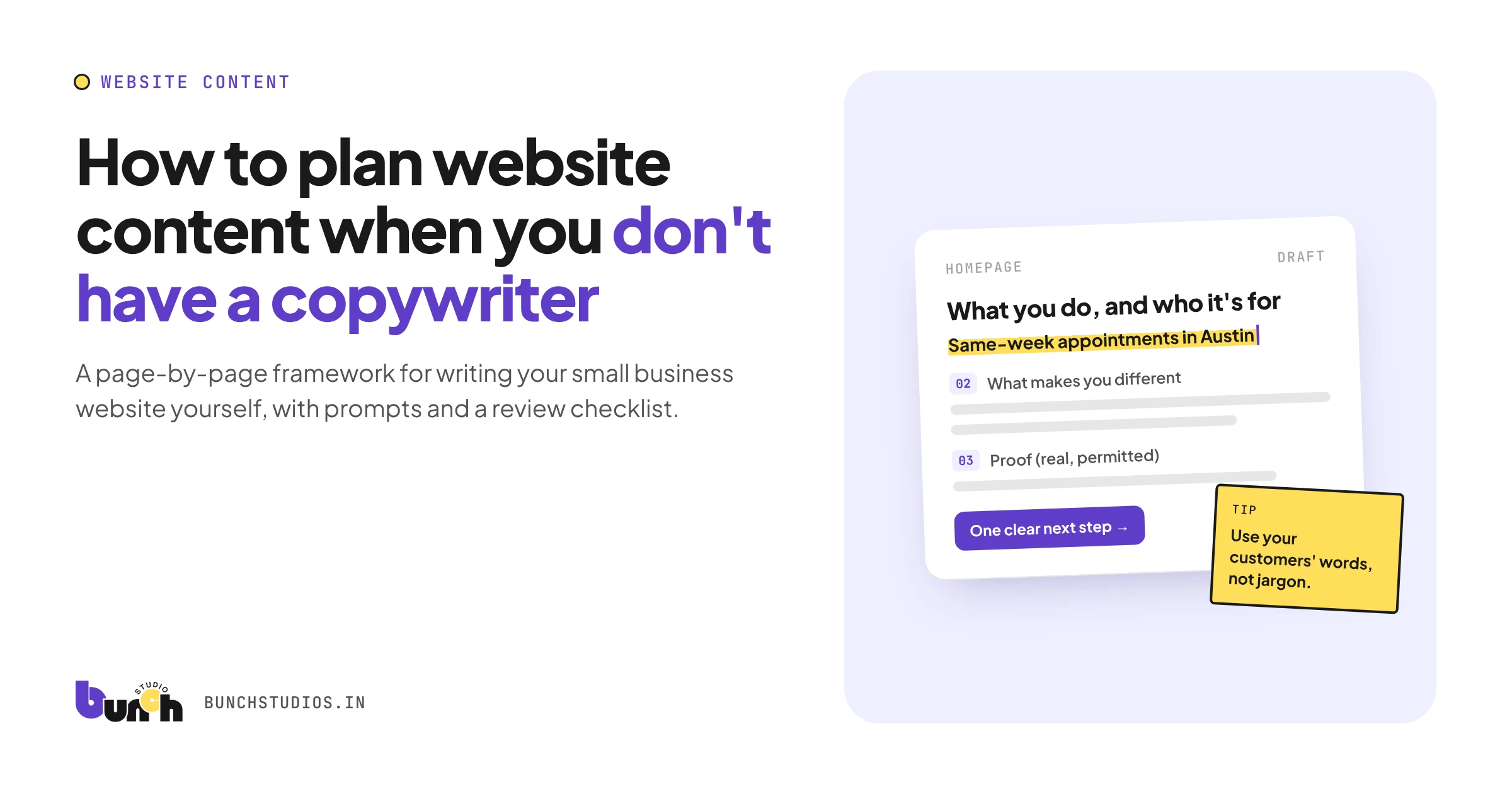
- Who will write the words: you, the provider, or a mix? Our guide to planning your website content helps if it's you.
- Do you have photos, a logo and brand colors?
8. Look and feel
- Three to five websites you like, and why (layout, tone, simplicity).
- Anything you dislike.
9. Editing after launch
- What you'll want to update yourself (services, prices, team, blog posts), and who will do it.
10. Timeline
- Any hard deadline, and why (season, event, launch).
11. Budget approach
- A range you're comfortable with, or "please advise." Sharing a range helps providers suggest the right scope.
12. Decision-making
- Who gives feedback and who has the final say.
Example brief (hypothetical)
Hypothetical example for illustration only.
Business: a two-person bookkeeping firm in Ohio serving local restaurants and retailers.
Audience: owners of small food and retail businesses who are behind on their books.
Goal: more requests for a free consultation; fewer phone calls asking what we do.
Pages: Home, Services (bookkeeping, payroll, catch-up), About, Pricing approach, Contact. Blog later.
Features: consultation booking linked to our calendar; contact form to our inbox.
Content: we'll supply facts; we'd like help writing.
Look: calm, simple, professional; we like sites that explain services clearly.
Editing: we want to update team photos and service details ourselves.
Timeline: live before tax season.
Decision-maker: both owners; one sends consolidated feedback.
Common brief mistakes
- Listing features without the reason. "We need a blog" is less useful than "we want to answer common client questions."
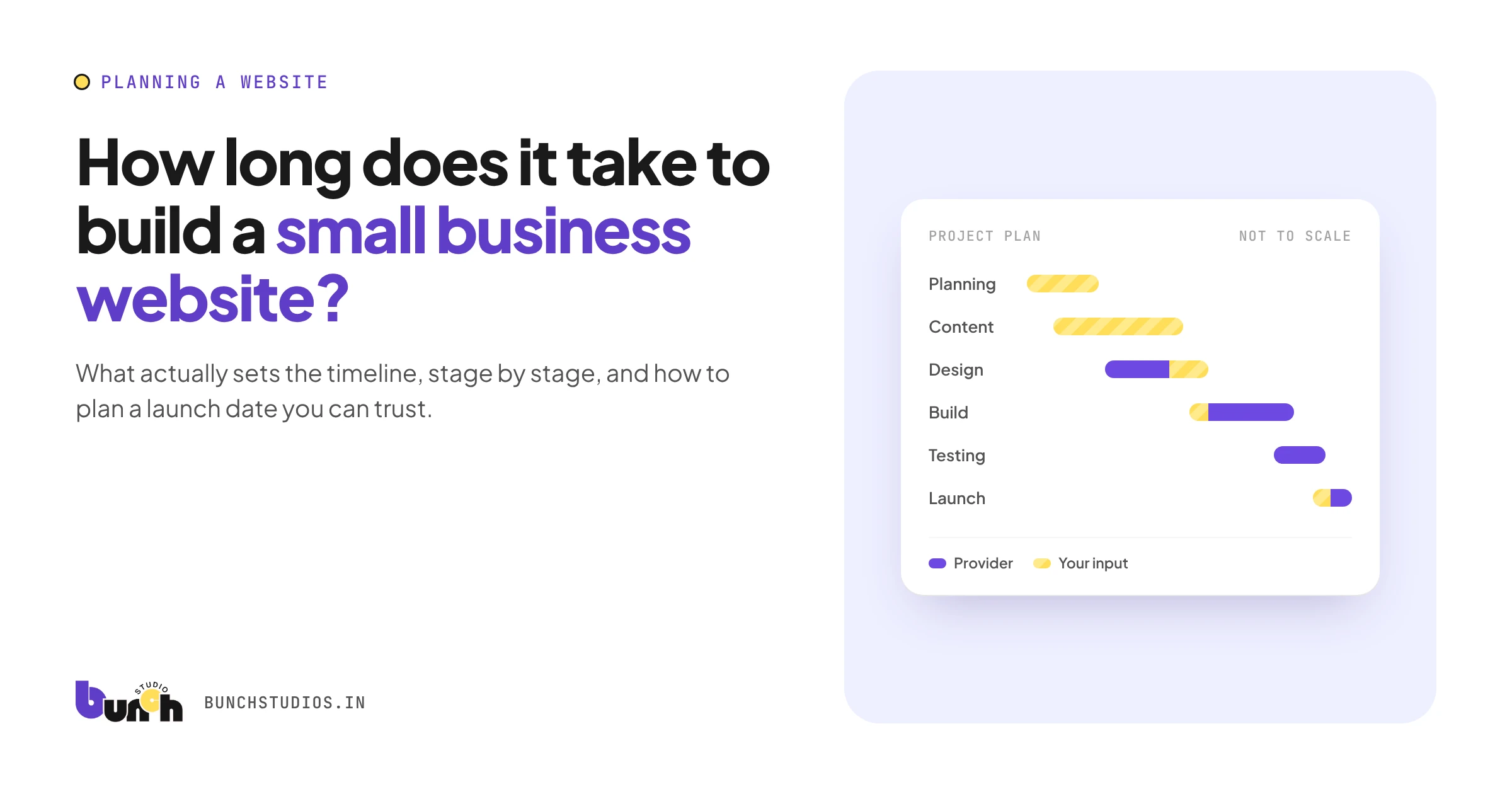
- Leaving content until later. It's usually the biggest delay. See how long a website takes.
- Only showing designs you like. Say what you like about them.
- Not naming who decides. Feedback from five people with no final say slows everything.
What a good designer sends back
A brief should start a conversation, not end one. Expect a good provider to reply with questions about anything vague, push back where your plan and budget don't match, and then send a written scope that names the pages, features, content responsibility, review rounds, timeline and price. If a reply skips straight to a price with no questions, treat that as a warning sign.
What to do with your brief
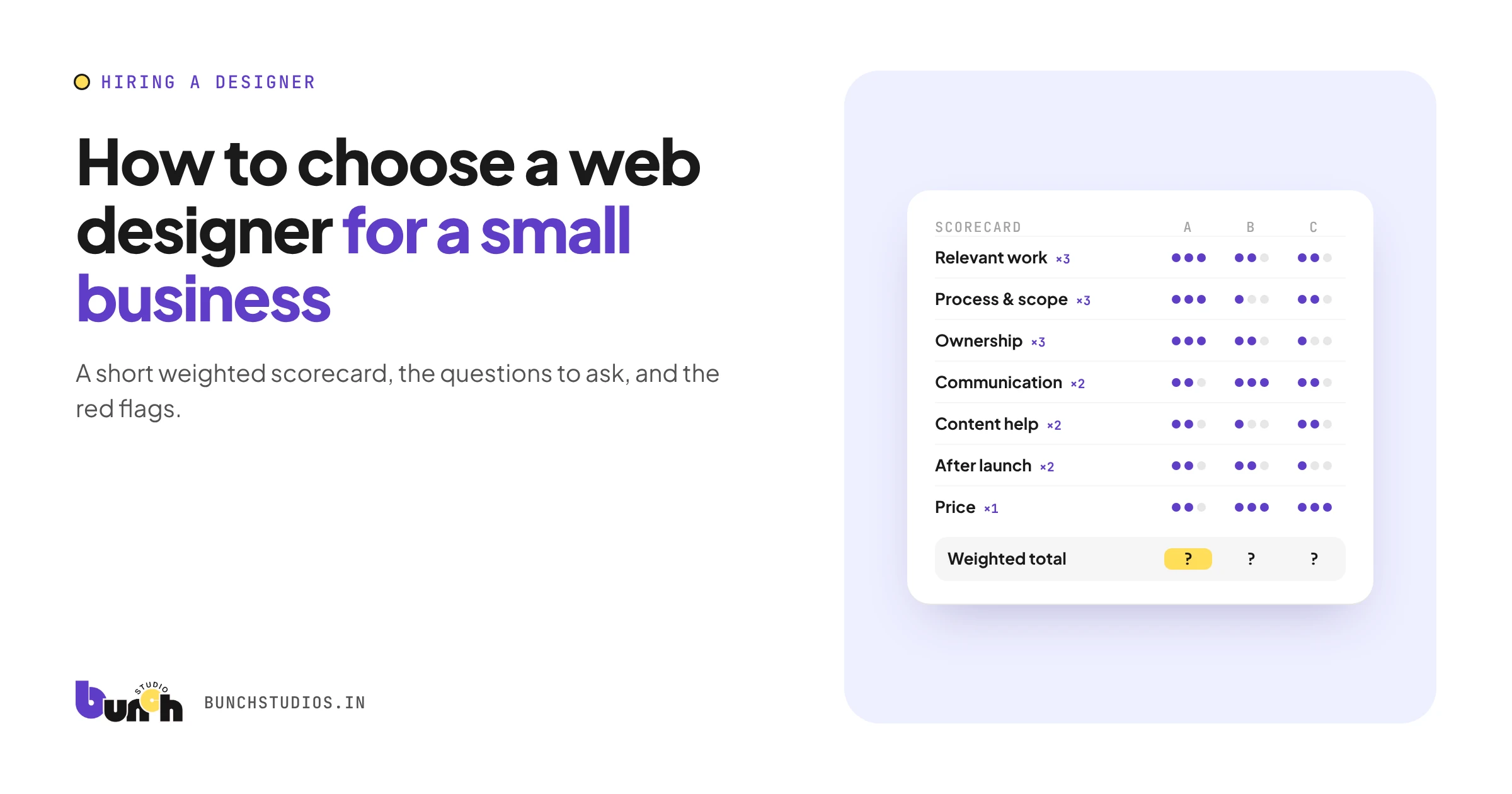
Send the same brief to two or three providers and compare their responses: the questions they ask back are often as revealing as the quote. Our guide to choosing a web designer has a scorecard for comparing them.
Send your brief to Bunch Studios
If you've written a brief, you're ready for a scoped estimate. Send it to us and we'll reply within 24 hours with next steps, then a written scope, price and timeline.
Request a Scoped EstimateHow we made this guide: drafted with AI assistance.