How to Make a Small Business Website Look More Trustworthy
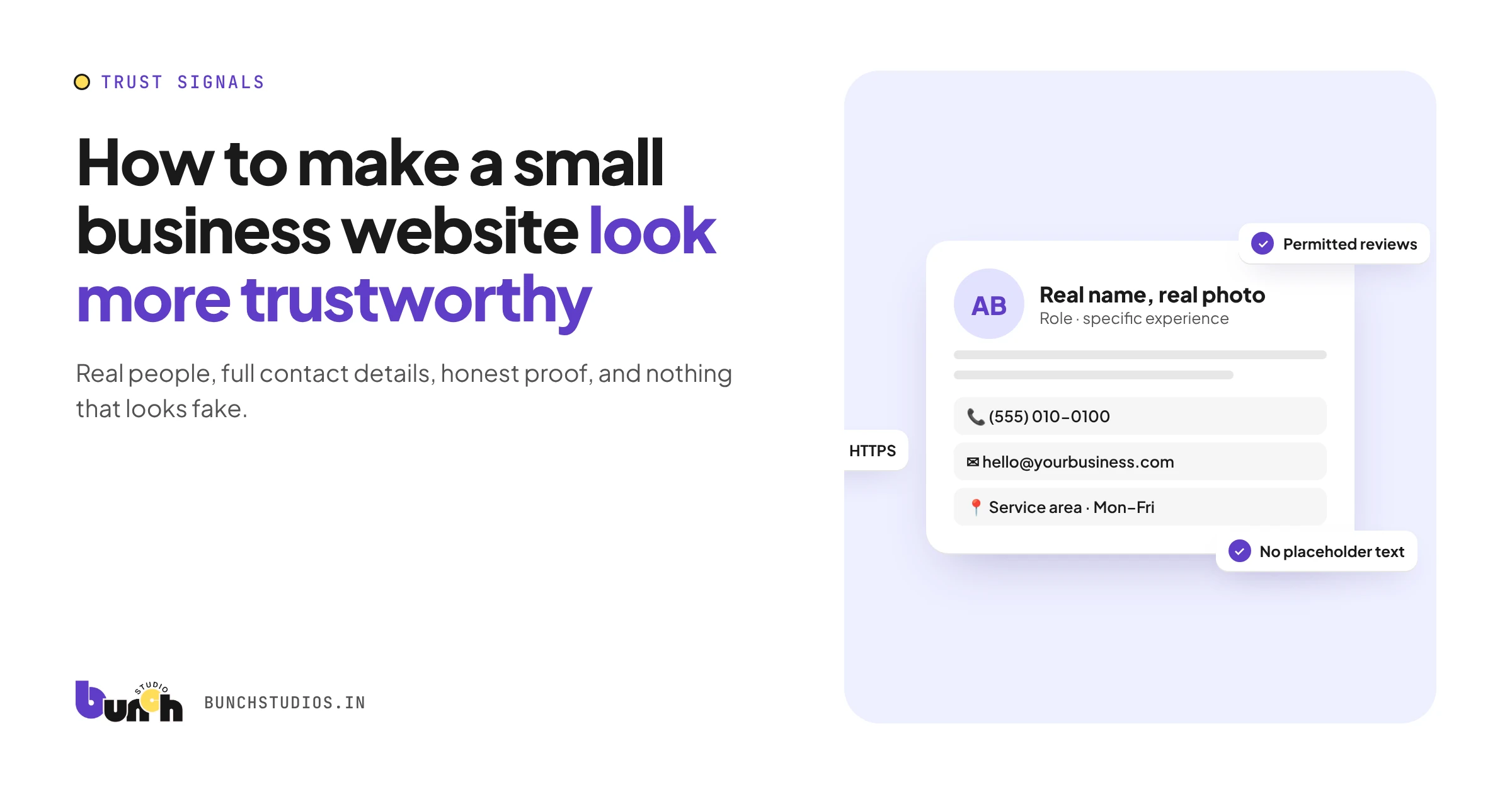
A website earns trust when it makes it easy to check that you're real, you're who you say you are, and you'll do what you promise. In practice that means real names and photos, full contact details, a clear explanation of what you offer and how pricing works, honest proof you have permission to show, a site that's consistent, current and secure, and nothing that looks fake. You don't need a big budget for most of it. You need accuracy and specifics.
The trust checklist
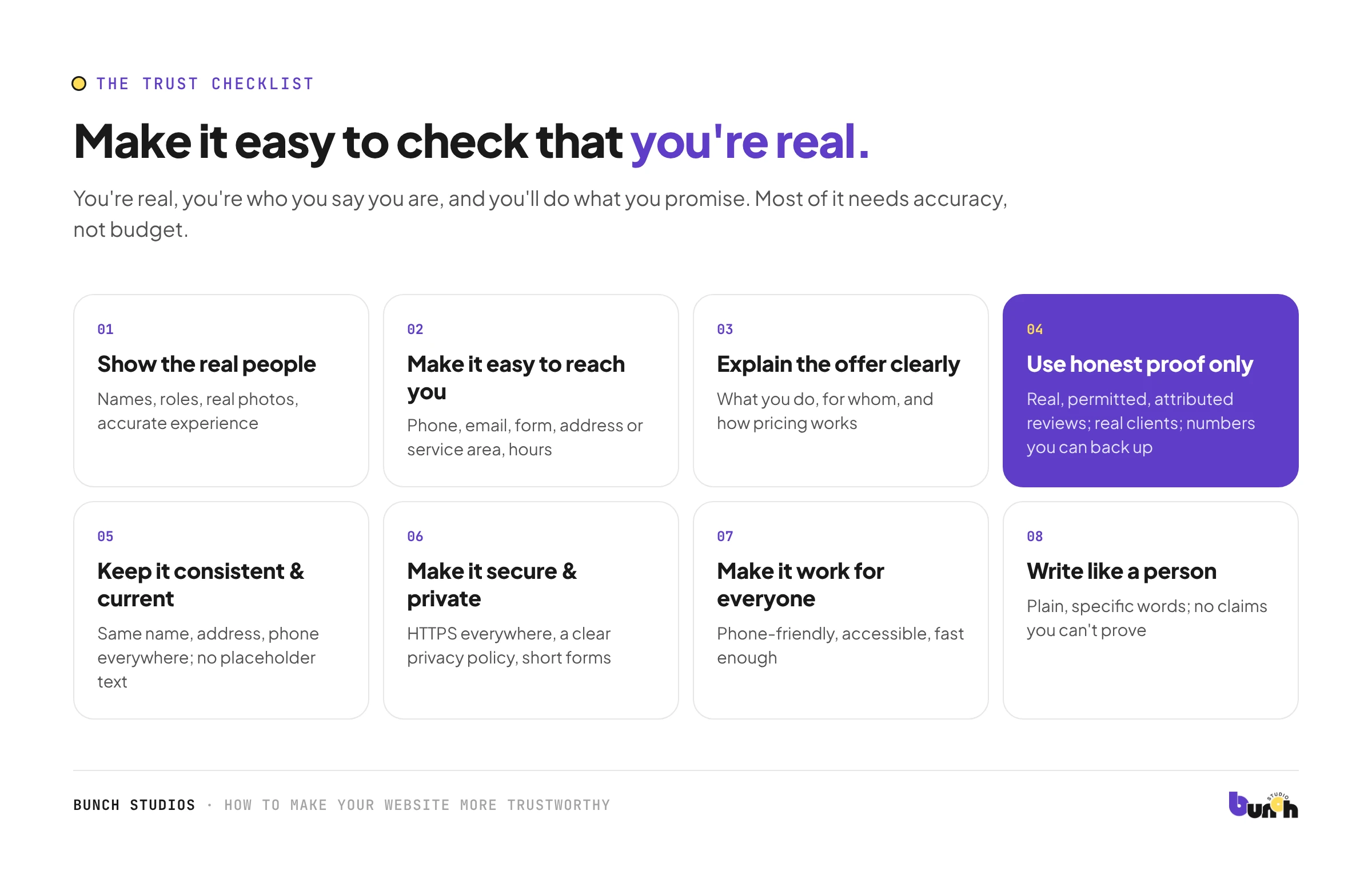
1. Show the real people
- Names, roles and real photos of the people customers will deal with.
- Accurate, specific experience ("five years designing booking systems for clinics," not "industry-leading expertise").
- Links to real professional profiles where relevant.
2. Make it easy to reach you
- Phone, email and a form, all tested and working.
- A physical address or a clear service area.
- Hours or expected reply time, and stick to it.
- Social media links that go to your profiles, not to the platforms' homepages.
3. Explain the offer clearly
- What you do, who it's for, and what's included, in plain words.
- How pricing works: a price, a range, or how quotes are calculated. Being vague about price makes people wary.
- What happens after someone gets in touch.
4. Use honest proof only
- Reviews and testimonials from real customers, with their permission, attributed accurately.
- Client logos only for real clients who agreed to be shown.
- Numbers ("50+ projects") only if you can back them up.
- Examples of real work.
Fake or inflated proof backfires: people notice duplicated testimonials, generic logos and round numbers that don't add up. In the US it's also a legal issue. The Federal Trade Commission's Trade Regulation Rule on the Use of Consumer Reviews and Testimonials (16 CFR Part 465) prohibits fake reviews and testimonials, buying them, and certain undisclosed insider reviews (FTC). This is general information, not legal advice.
5. Keep it consistent and current
- Same business name, address and phone number everywhere (site, Google Business Profile, directories).
- No outdated offers, old dates or "coming soon" pages.
- A current copyright year in the footer and recent content where dates are shown.
- No placeholder content: "Lorem ipsum," "Author Name," test pages or empty sections.
6. Make it secure and private
- HTTPS on every page (the padlock in the browser).
- A clear privacy policy explaining what you collect through forms and analytics.
- Forms that ask only for what you need.
7. Make it work for everyone
- Easy to use on a phone.
- Readable contrast, labeled forms, alt text, keyboard-friendly navigation. See our accessibility checklist.
- Fast enough that people don't give up.
8. Write like a person
- Plain, specific language instead of buzzwords.
- No exaggerated claims ("best in the country") you can't prove.
- Answers to the questions customers actually ask.
How to collect real reviews
If you don't have much proof yet, build it honestly:
- Ask at the right moment, right after a job is finished and the customer is happy.
- Make it easy: send one link, to your Google Business Profile or a short form.
- Ask permission before quoting someone on your site, and agree how they'll be named.
- Don't buy reviews, and never offer a reward that depends on the review being positive. Keep what you show accurate, including the date.
Until you have reviews, show specifics instead: real examples of work, your process, and the people behind the business.
Quick audit: things that quietly undermine trust
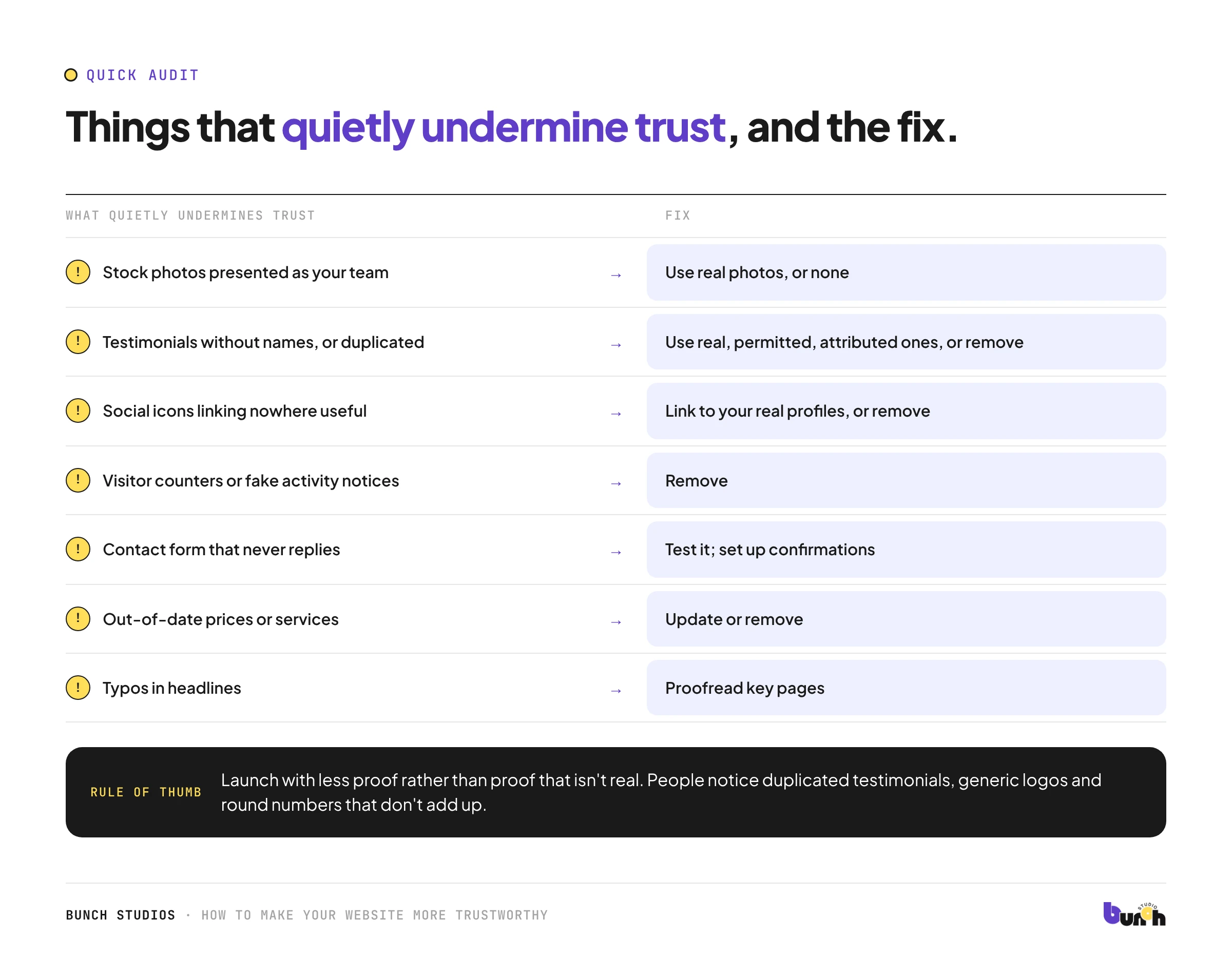
| Problem | Fix |
|---|---|
| Stock photos presented as your team | Use real photos, or none |
| Testimonials without names, or duplicated | Use real, permitted, attributed ones, or remove |
| Social icons linking nowhere useful | Link to your real profiles or remove |
| Visitor counters or "fake" activity notices | Remove |
| Contact form that never replies | Test it; set up confirmations |
| Prices or services that are out of date | Update or remove |
| Typos in headlines | Proofread key pages |
For the pages every site needs in the first place, see what a small business website should include.
How Bunch Studios handles proof and trust
We'd rather launch a site with less proof than with proof that isn't real. When we build or redesign a site, we only use testimonials, logos and numbers the client can back up and has permission to show, and we remove placeholder content before launch.
Request a Scoped EstimateHow we made this guide: drafted with AI assistance and checked against the FTC source linked above. Not legal advice.
Sources: U.S. Federal Trade Commission, Trade Regulation Rule on the Use of Consumer Reviews and Testimonials (16 CFR Part 465), checked Oct 13, 2026