How to Plan Website Content When You Don't Have a Copywriter
You don't need a professional copywriter to write a good small business website. You need a plan: know which pages you need, what each page has to answer, and the words your customers actually use. Write plainly, put the most useful information first, and give every page one clear next step. This guide gives you a page-by-page framework, a way to use AI without sounding generic, and a checklist to review what you've written.
Start with three questions, not a blank page
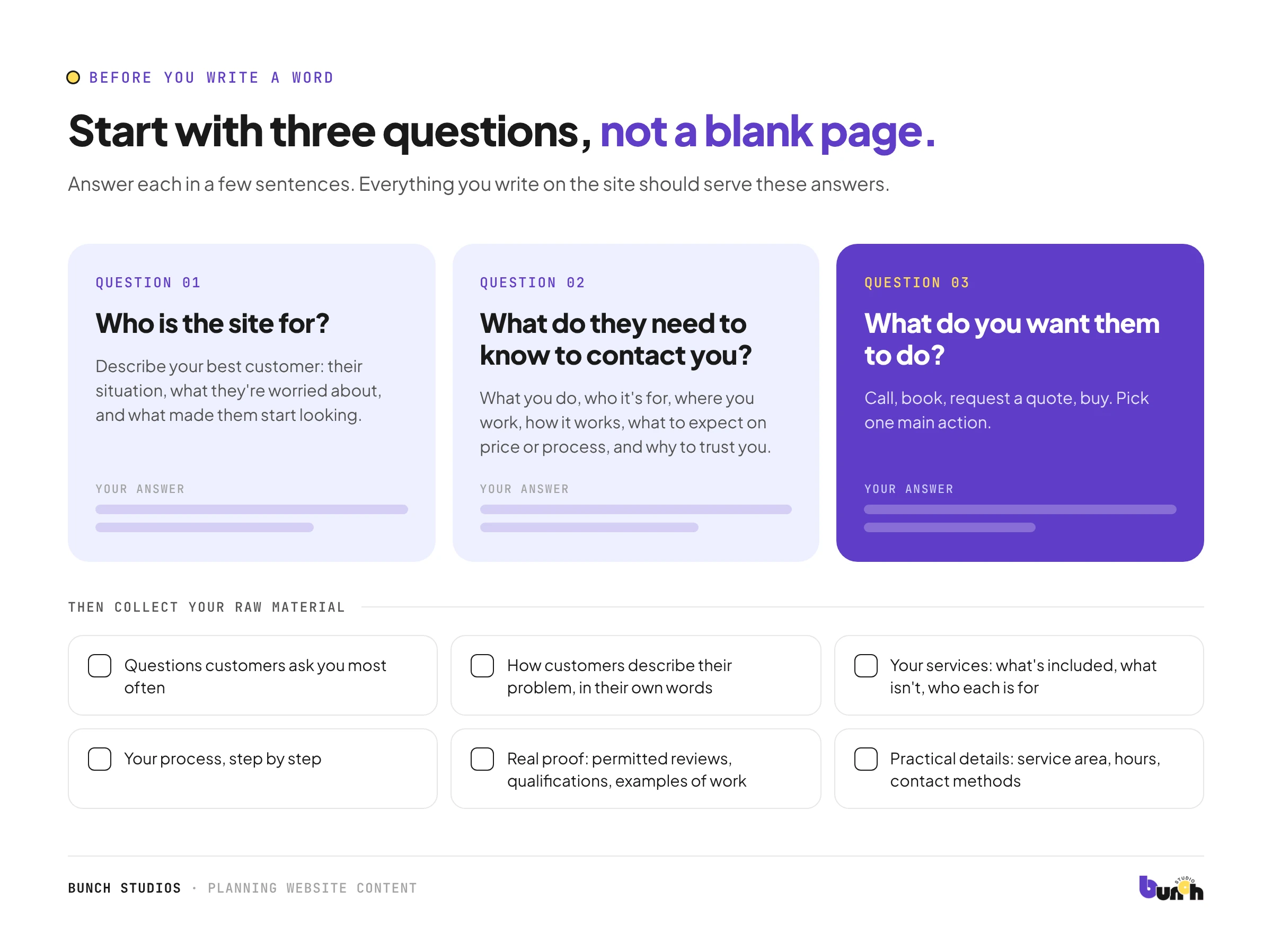
Before you write a word, answer these in a few sentences each:
- Who is the site for? Describe your best customer: their situation, what they're worried about, and what made them start looking.
- What do they need to know to contact you? Usually: what you do, who it's for, where you work, how it works, what to expect on price or process, and why they should trust you.
- What do you want them to do? Call, book, request a quote, buy. Pick one main action.
Everything you write should serve those answers.
Collect your raw material first
Writing is easier when you're not inventing everything at once. Gather:
- the questions customers ask most often (check your email, texts and call notes)
- how customers describe their problem in their own words: reviews, enquiry emails and sales conversations are the best sources
- your services, what's included and not included, and who each is for
- your process, step by step
- real proof: reviews you have permission to use, qualifications, examples of work
- practical details: service area, hours, contact methods
Page-by-page prompts
Homepage
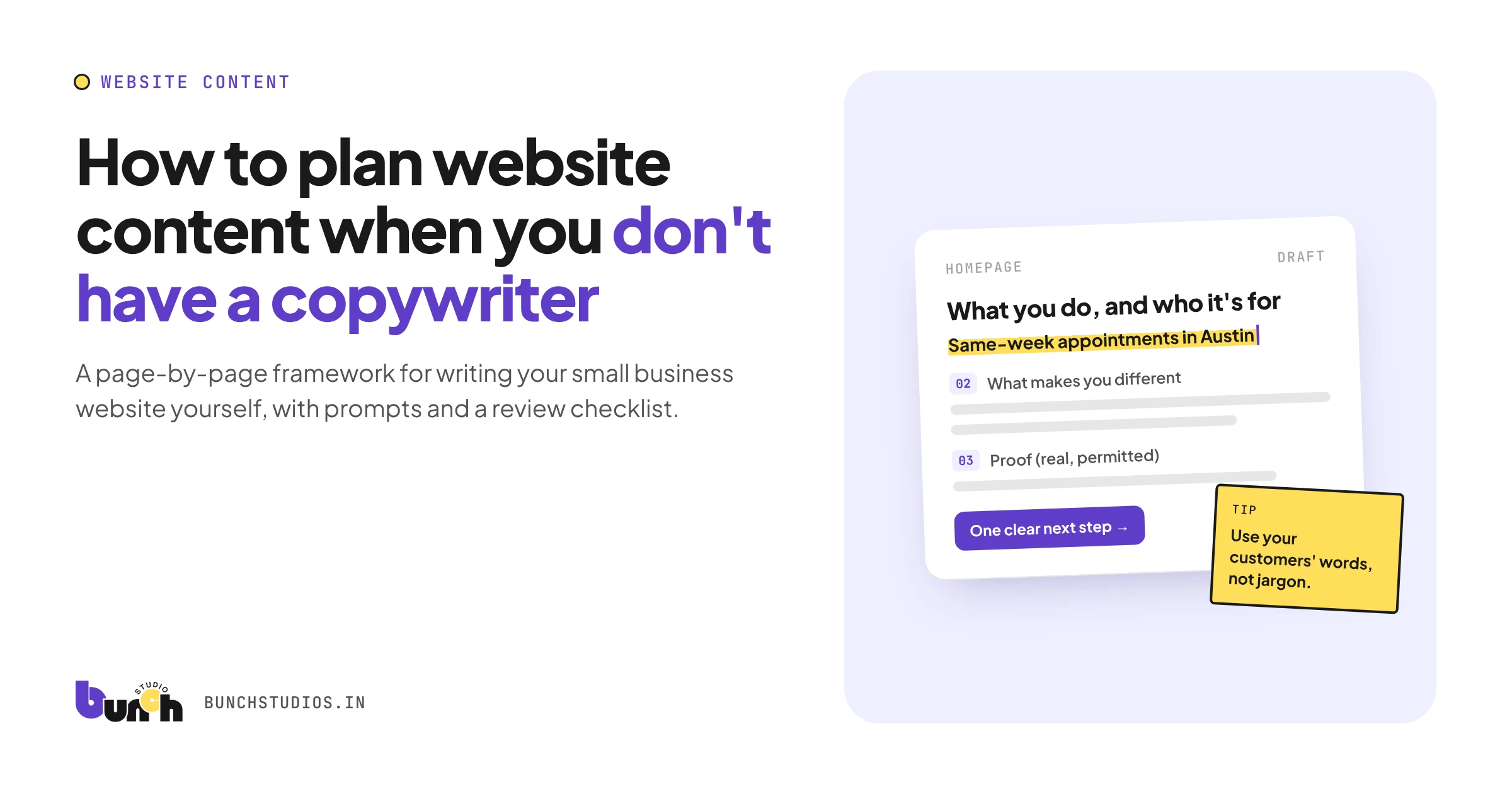
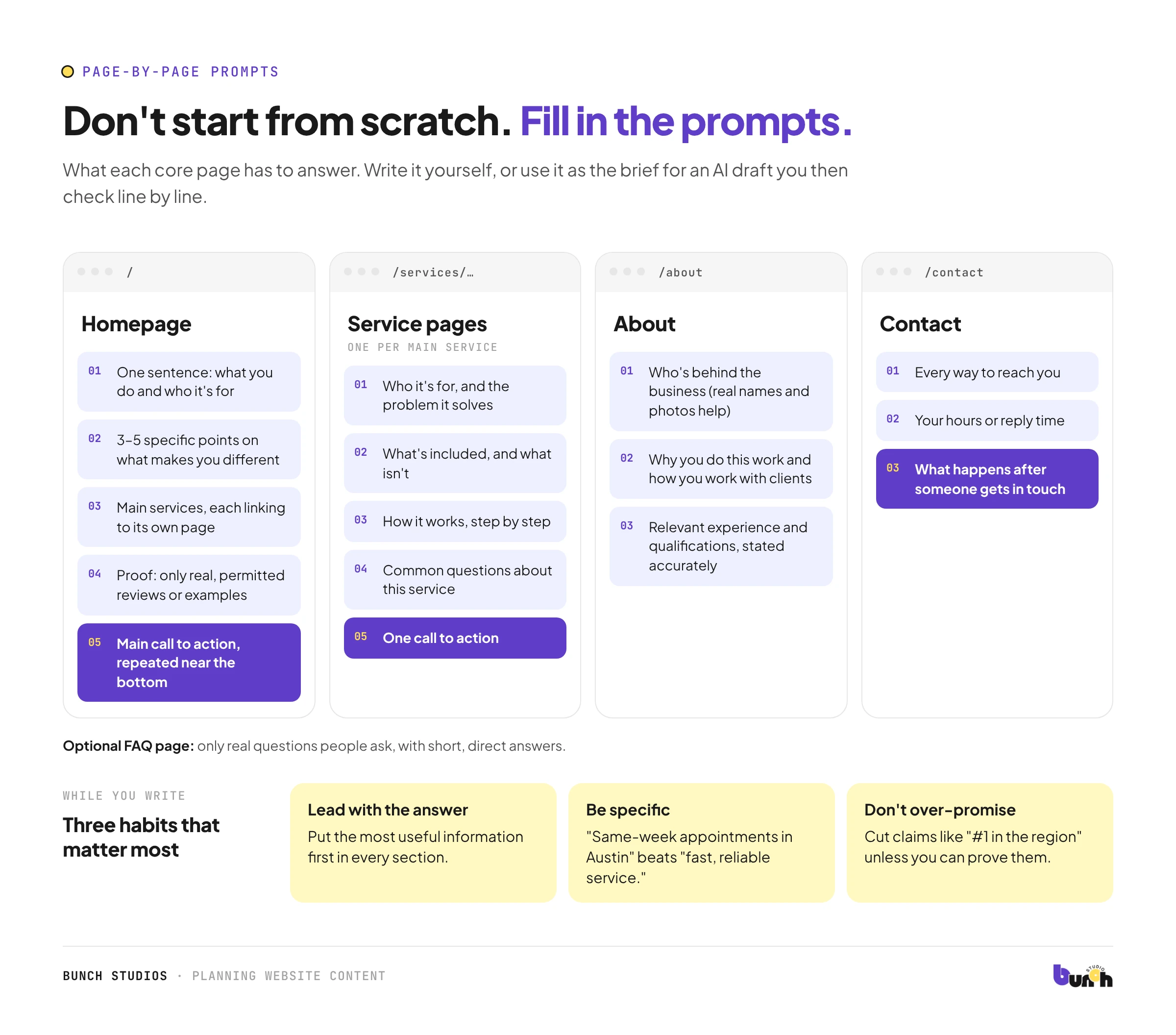
- One sentence: what you do and who it's for.
- Three to five specific points on what makes working with you different.
- Your main services, each linking to its own page.
- Proof (only real, permitted reviews or examples).
- Your main call to action, repeated near the bottom.
Service pages (one per main service)
- Who this service is for, and the problem it solves.
- What's included, and what isn't.
- How it works, step by step.
- Common questions about this service.
- One call to action.
About
- Who's behind the business (real names and photos help).
- Why you do this work and how you work with clients.
- Relevant experience and qualifications, stated accurately.
Contact
- Every way to reach you, your hours or reply time, and what happens after someone gets in touch.
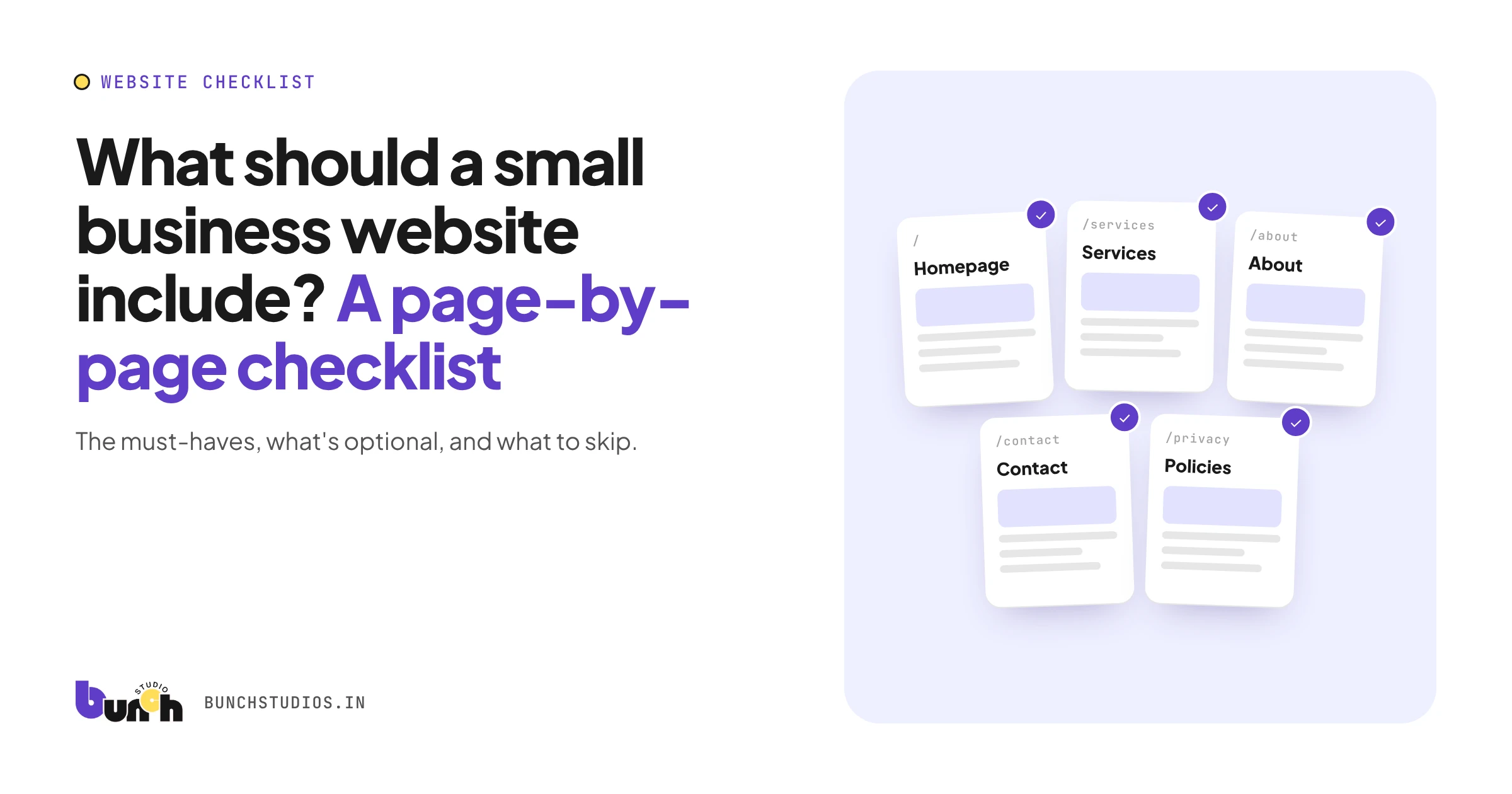
Not sure which pages you need at all? See what a small business website should include.
Writing tips that make the biggest difference
- Lead with the answer. Put the most useful information first in every section.
- Use your customers' words, not industry jargon.
- Be specific. "Same-week appointments in Austin" beats "fast, reliable service."
- Keep paragraphs short, because many people read on phones.
- Use clear headings so people can skim.
- Don't promise what you can't back up. Remove claims like "#1 in the region" unless you can prove them.
A quick before and after (hypothetical example)
Before: "We provide high-quality, customer-focused cleaning solutions."
After: "Weekly and one-off office cleaning for small offices in Denver, done after hours so your team never works around us."
The second version says what, for whom, where, and why it's different, in one sentence.
Using AI to draft your content
AI tools can turn your notes into a first draft quickly. They work well when you give them real facts (your services, process, customer questions) and poorly when you ask them to "write a homepage" from nothing, because you'll get generic copy that could belong to anyone.
If you use AI:
- feed it your raw material from the section above
- check every fact, number and claim yourself
- cut generic phrases and add specifics only you know
- read it out loud; if it doesn't sound like you, rewrite it
How long should each page be?
As long as it takes to answer the questions a customer has at that point, and no longer. A service page usually needs more detail than a contact page. If a section doesn't help someone decide or act, cut it.
Review checklist before you publish
- Could a stranger tell what you do, for whom and where within a few seconds of landing on the homepage?
- Does every page have one clear next step?
- Is every claim true and, where needed, backed up?
- Have you removed anything generic a competitor could also say?
- Is it easy to read on a phone?
- Has someone outside your business read it and understood it?
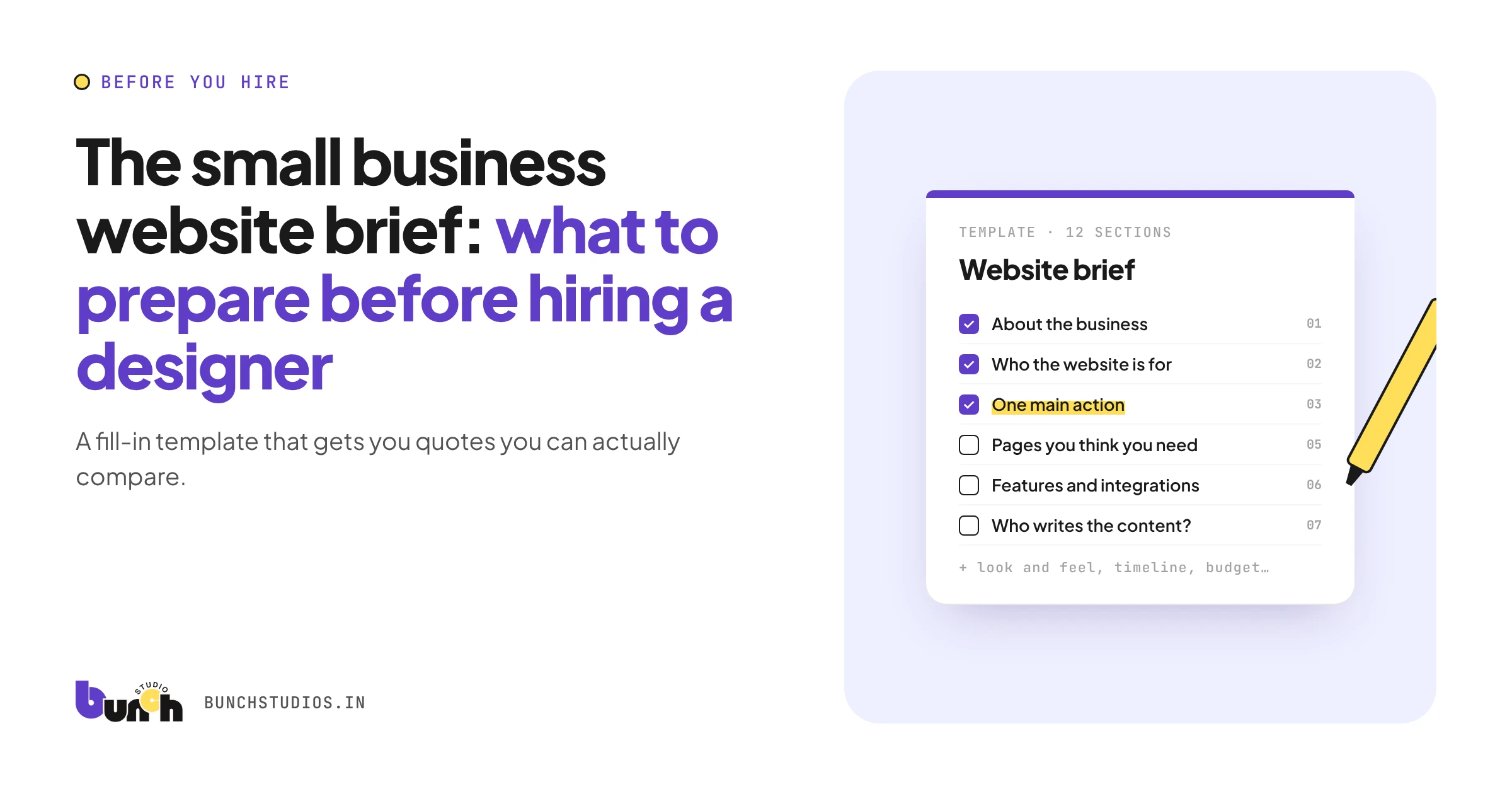
When your plan is ready, it becomes the core of a website design brief for whoever builds the site.
How Bunch Studios handles content
Most small businesses we talk to don't have website copy ready. When that's the case, we draft every page for you with AI-assisted writing, based on what you tell us about your business and customers. You review and approve every page before anything goes live. If you'd rather write it yourself, we'll give you the page structure to fill in.
Request a Scoped EstimateHow we made this guide: drafted with AI assistance.