When Should a Startup Invest in a Custom Website or MVP?
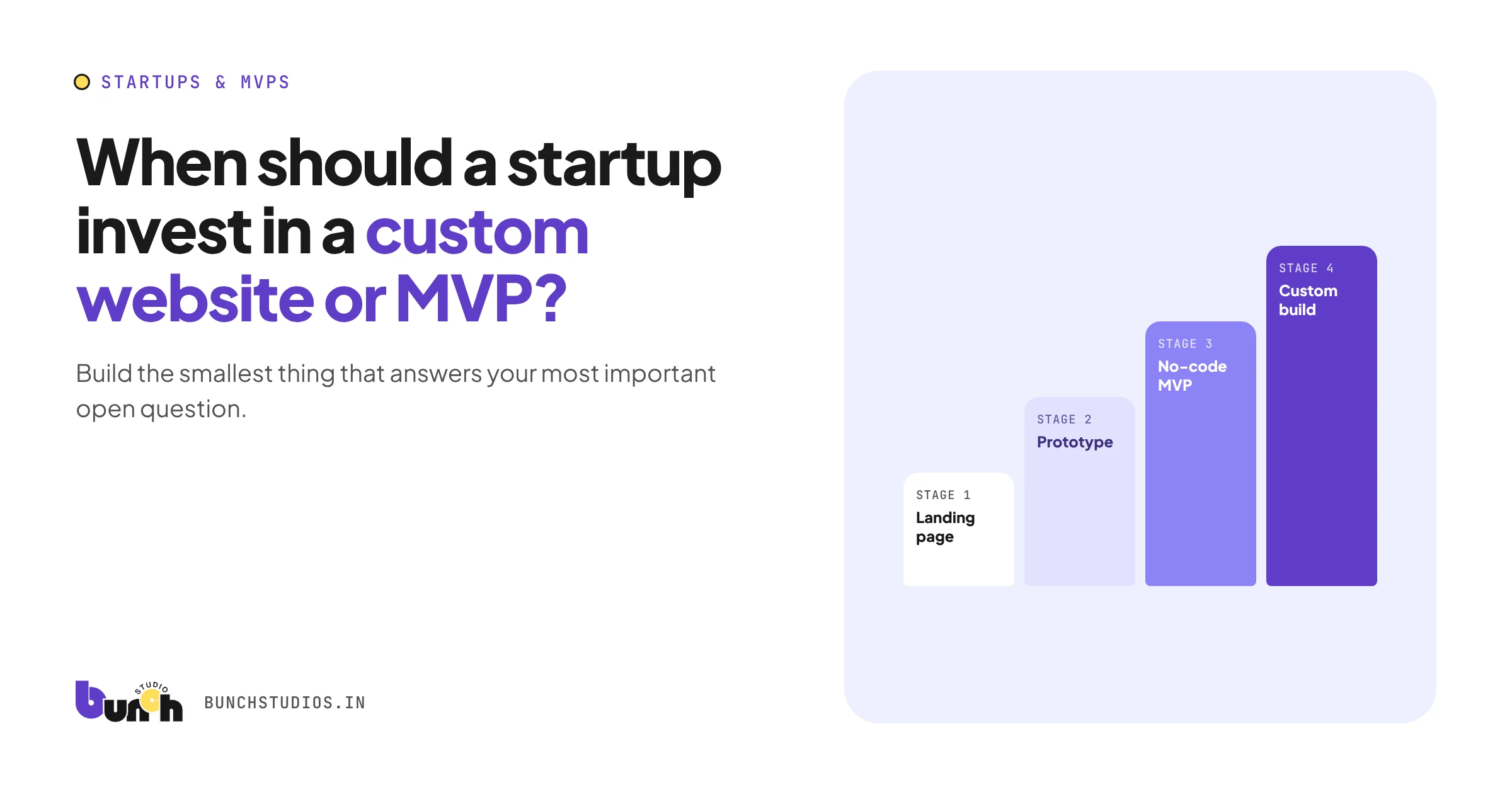
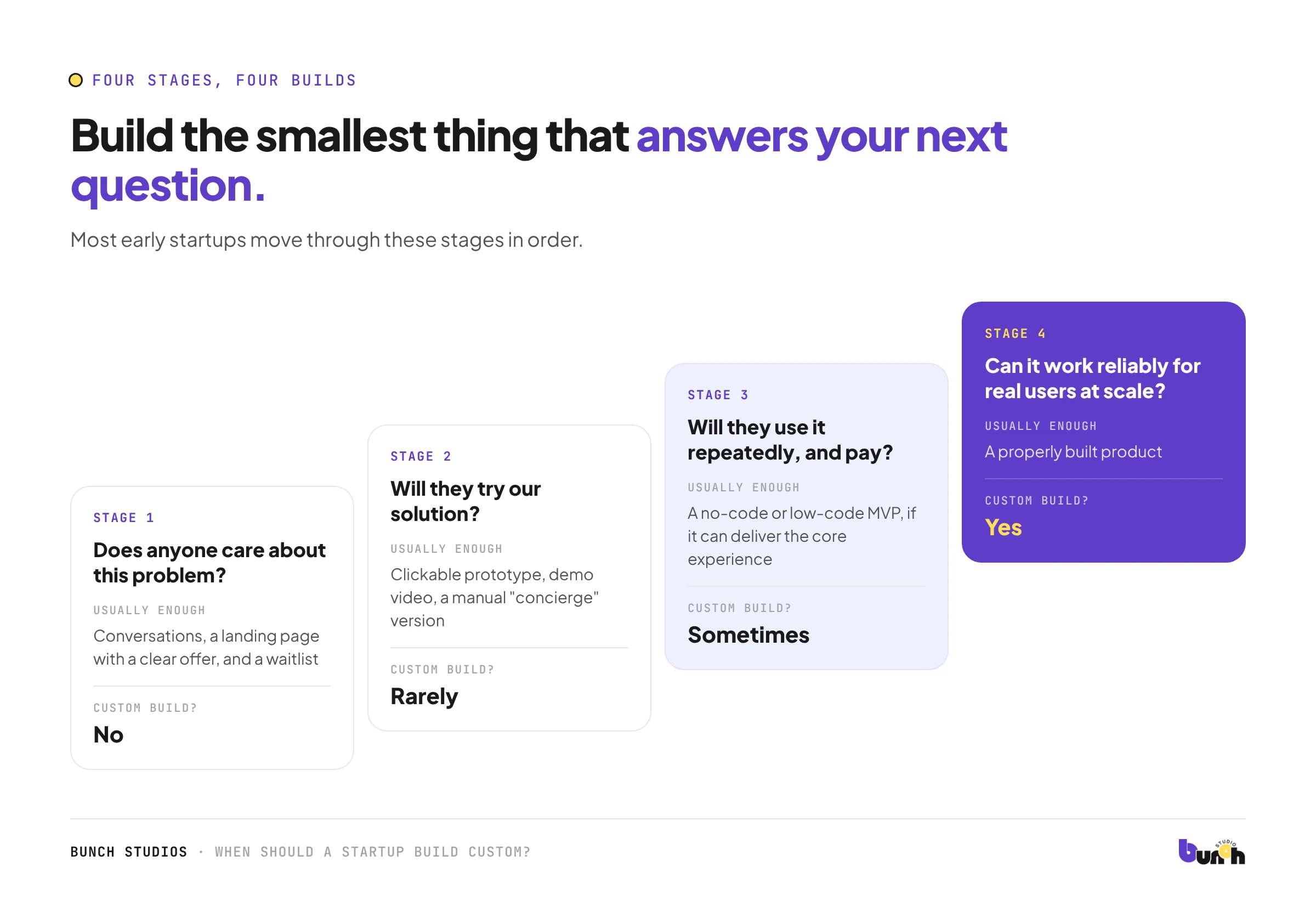
Build the smallest thing that answers your most important open question. If you don't yet know whether anyone wants the product, a landing page and conversations will tell you faster and cheaper than code. If you know people want it but need to see whether they'll use it, a no-code prototype or a manual "concierge" version often works. A custom-built MVP (minimum viable product) makes sense when the learning you need depends on the product actually working, and simpler tools can't deliver that experience. Most early startups move through these stages in order.
Four stages, four different builds
| What you need to learn | Usually enough | Custom build worth it? |
|---|---|---|
| Does anyone care about this problem? | Conversations, a landing page with a clear offer and a waitlist | No |
| Will they try our solution? | Clickable prototype, demo video, manual "concierge" version | Rarely |
| Will they use it repeatedly, and pay? | No-code or low-code MVP, if it can deliver the core experience | Sometimes |
| Can it work reliably for real users at scale? | A properly built product | Yes |
Signs a custom MVP is justified
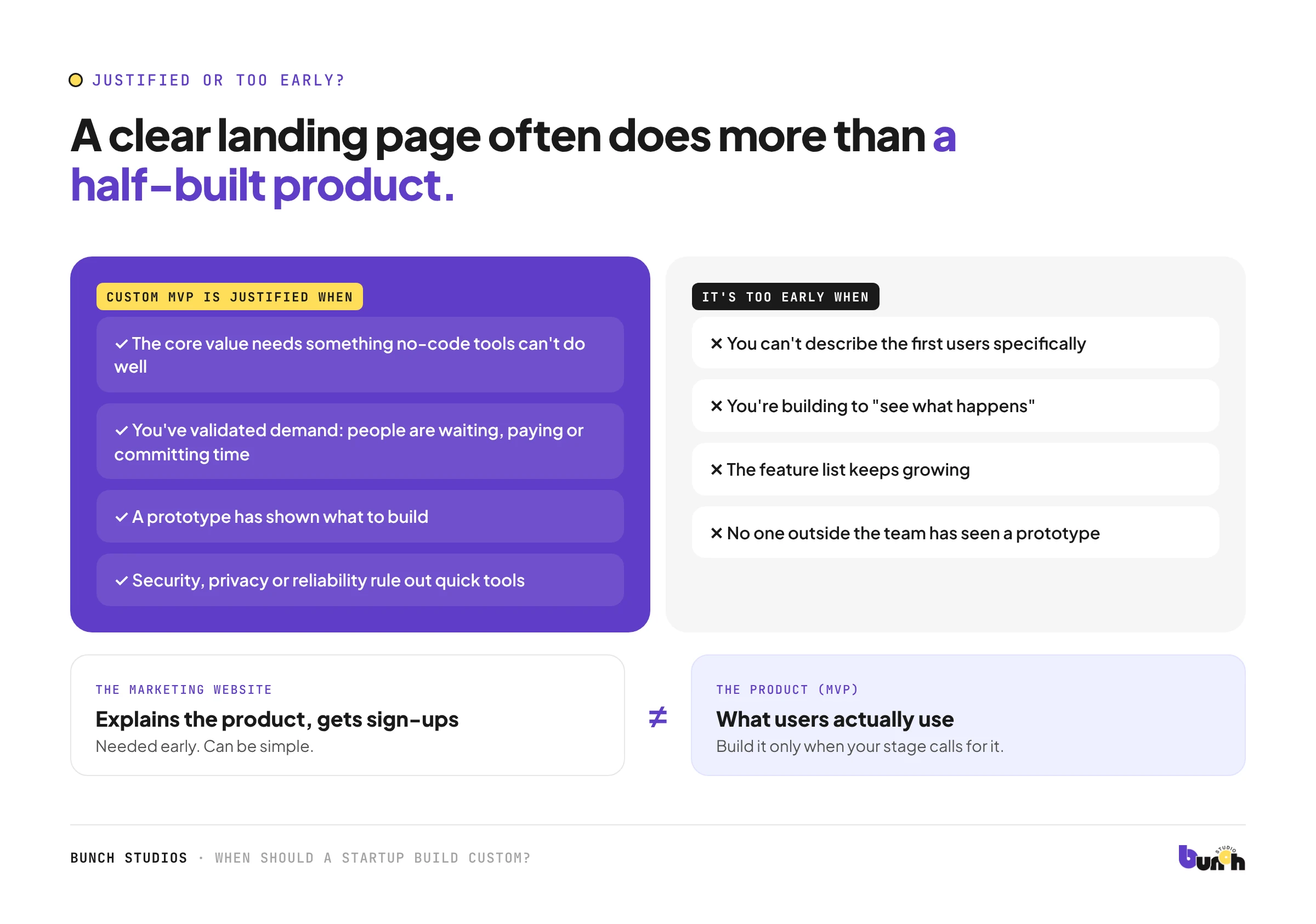
- The core value depends on something no-code tools can't do well (a specific workflow, data handling, performance, or integration).
- You've validated demand: people are waiting, paying or committing time.
- A prototype has shown what to build, so you're not guessing at features.
- Security, privacy or reliability requirements rule out quick tools.
Signs it's too early
- You can't yet describe who the first users are, specifically.
- You're building to "see what happens" rather than to answer a question.
- The feature list keeps growing.
- No one outside the team has seen a prototype.
Website vs. product
Founders often mix two separate things:
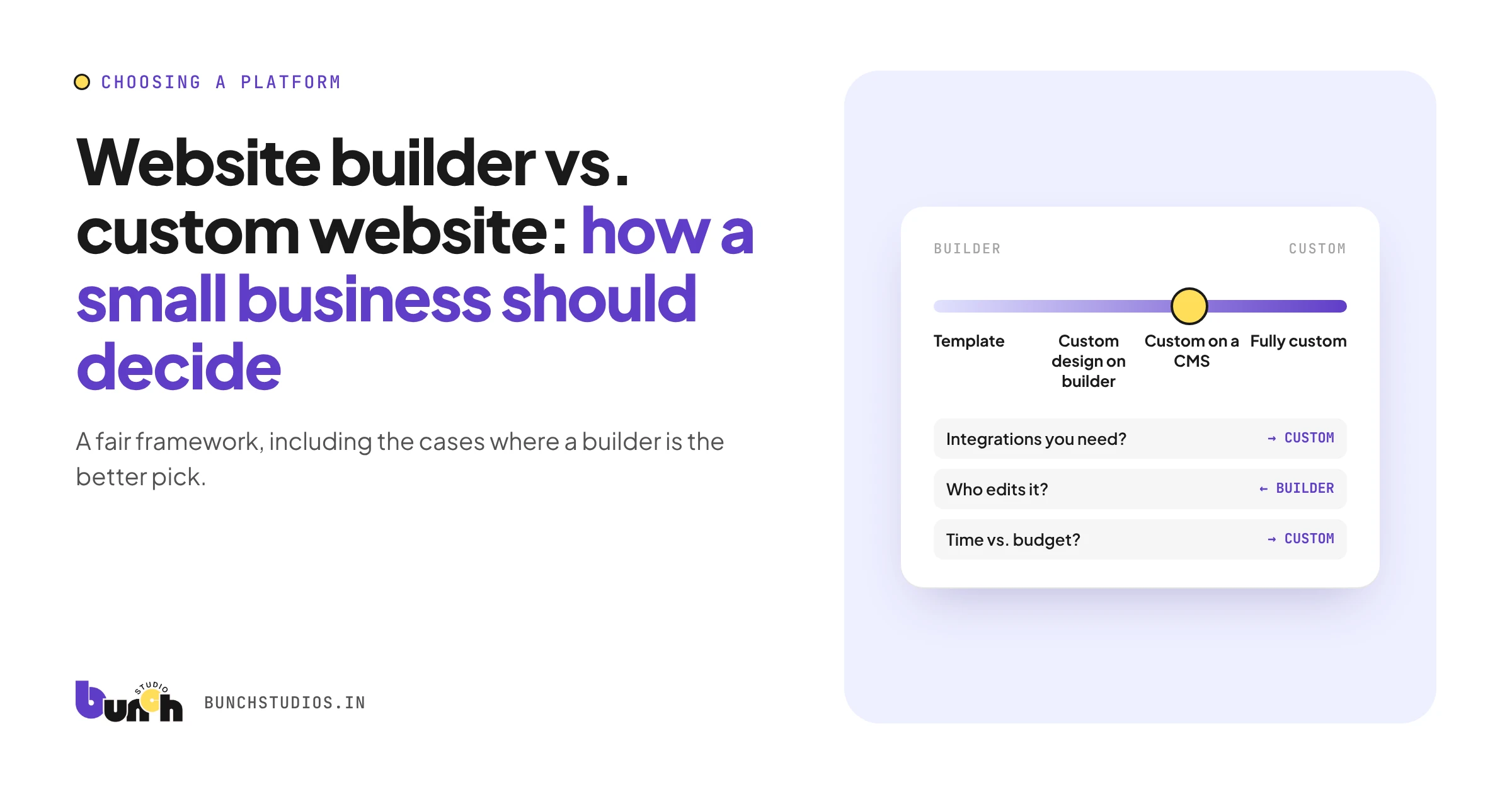
- The marketing website explains the product and gets sign-ups. It's needed early and can be simple. A builder is often fine; our website builder vs. custom website guide helps you decide.
- The product (MVP) is what users actually use. Build it only when the stage above calls for it.
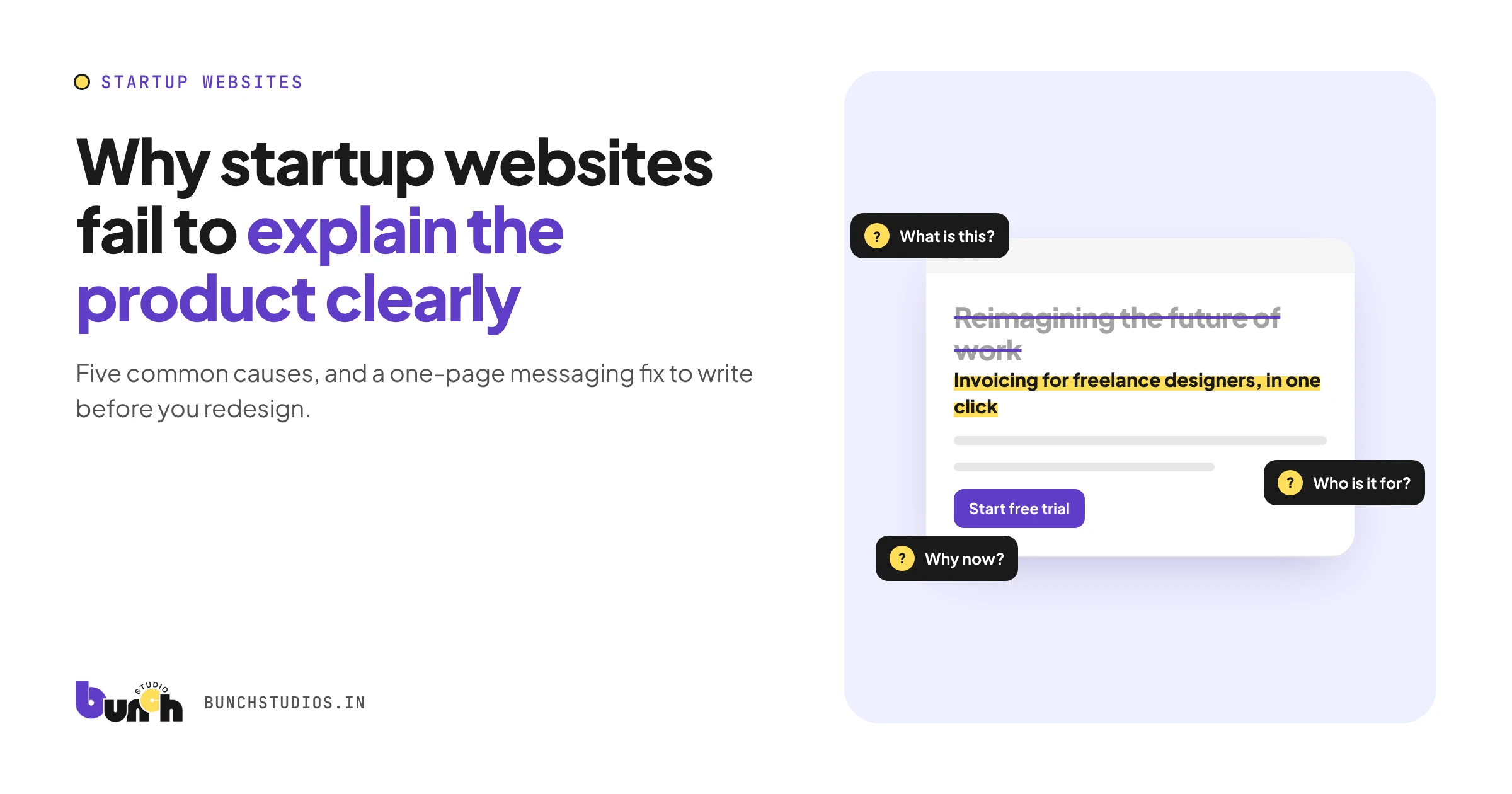
A clear landing page often does more for an early startup than a half-built product. Getting its message right matters more than its design: see why startup websites fail to explain the product.
What a lean first website needs
At the landing-page stage, one well-made page is usually enough. It should say who the product is for and what problem it solves, explain how it works in a few plain steps, show only proof you really have, and offer one clear action, such as joining a waitlist or booking a demo. Add simple analytics so you can see how many visitors take that action. If few do, change the message before you change the product.
A worked example (hypothetical)
Hypothetical example for illustration only. A founder wants to build scheduling software for small dog-grooming salons. Stage one: she interviews salon owners and puts up a one-page site with a waitlist. Stage two: she runs scheduling for three salons by hand, using a shared calendar and text messages, to see if they'd rely on it. Stage three: once they ask to pay, she builds a no-code version. Only when the no-code tool can't handle reminders and payments reliably does a custom build become the right next step.
Each step answered one question for far less than building the full product first.
Questions to answer before you build
- What's the single most important thing we need to learn next?
- What's the cheapest way to learn it?
- What does "success" look like for this version, as a number or behavior?
- What will we deliberately leave out?
Write the answers down before anyone starts building, and share them with whoever does the work. A designer or developer who knows the question you're trying to answer can often suggest a faster, cheaper way to answer it.
The cost of building too early
Building before you know what users need usually means rebuilding later. Code written around guesses has to be changed or thrown away when real users behave differently, and every month spent building is a month not spent learning. That's why the stages above start with the cheapest tests.
How Bunch Studios can help
Alongside websites for small businesses, Bunch Studios designs product interfaces, dashboards and apps for very early, small startups. We'll help you decide what the next build should be, which sometimes means building less.
Discuss Your ProjectHow we made this guide: drafted with AI assistance.