Web Design vs. Web Development: What's the Difference for Your Business?
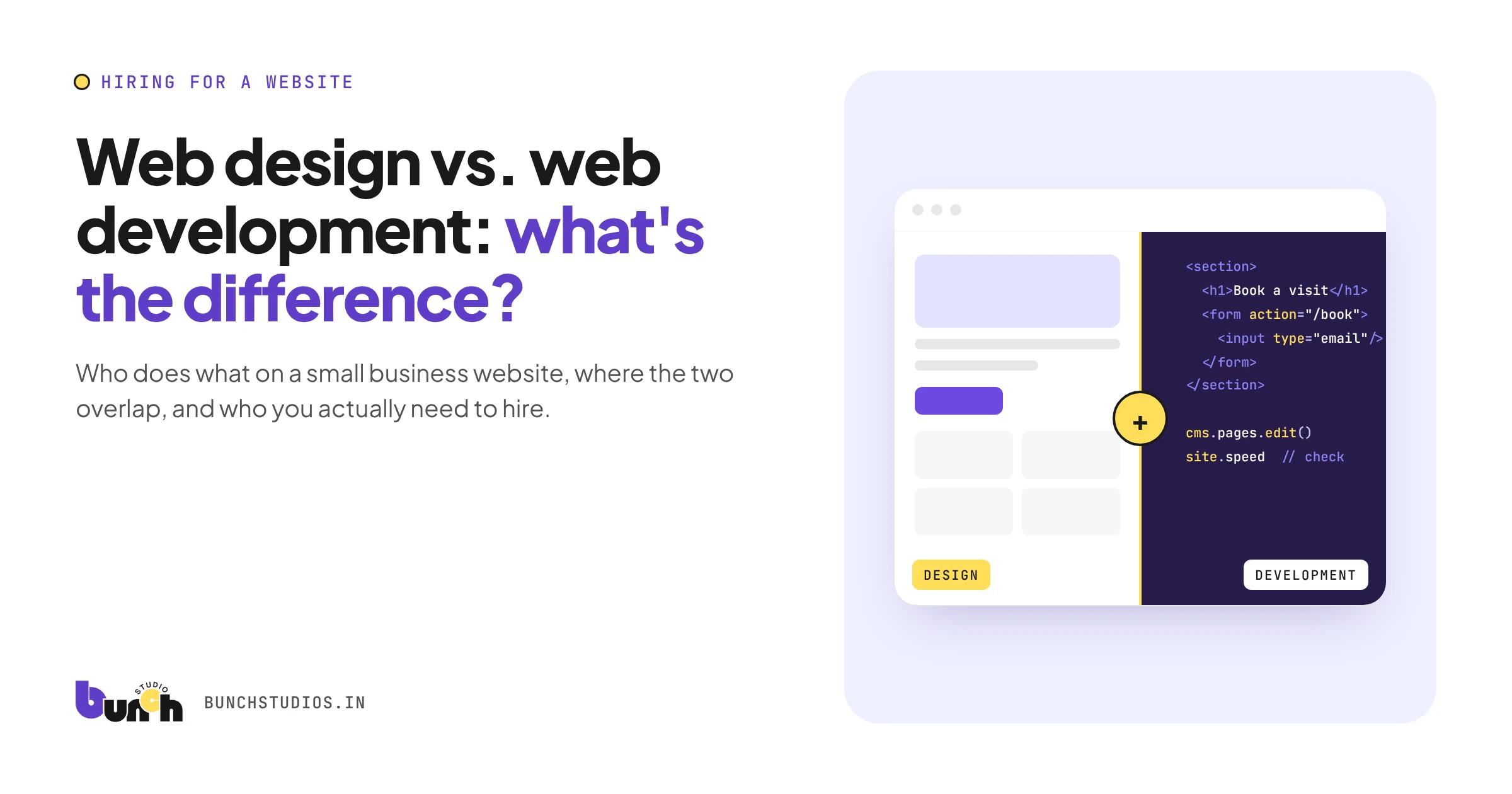
Web design decides what your website looks like and how people use it: the layout, navigation, colors, type and how each page guides a visitor to act. Web development turns that design into a working site: the code, the content management system (CMS) you edit, the forms, the integrations, and the speed and security behind it. A small business website needs both. The real question isn't which one to hire, but whether one person or team covers both well, and who is responsible when something falls between them.
What a web designer does
The US Bureau of Labor Statistics describes digital designers as developing, creating and testing a website's layout, functions and navigation for usability, and being responsible for its look and functionality (BLS). On a small business project, that usually means:
- planning which pages you need and how visitors move between them
- designing layouts for phones and desktops
- choosing type, color and imagery that fit your brand
- deciding where the calls to action go, so visitors know how to contact or buy
- making sure the design is readable and usable for everyone
What you get from design: mockups or prototypes you can review before anything is built.
What a web developer does
BLS describes web developers as creating and maintaining websites and being responsible for technical aspects such as performance and capacity (BLS). It splits the work into two parts:
- Front-end development: building what visitors see and interact with, so the design works in real browsers and on real phones.
- Back-end development: the technical construction underneath, including how you add and edit pages through a CMS.
On a small business site, development also covers forms that actually deliver, booking or payment integrations, page speed, security updates and launch.
What you get from development: a working website you can use and edit.
Side by side
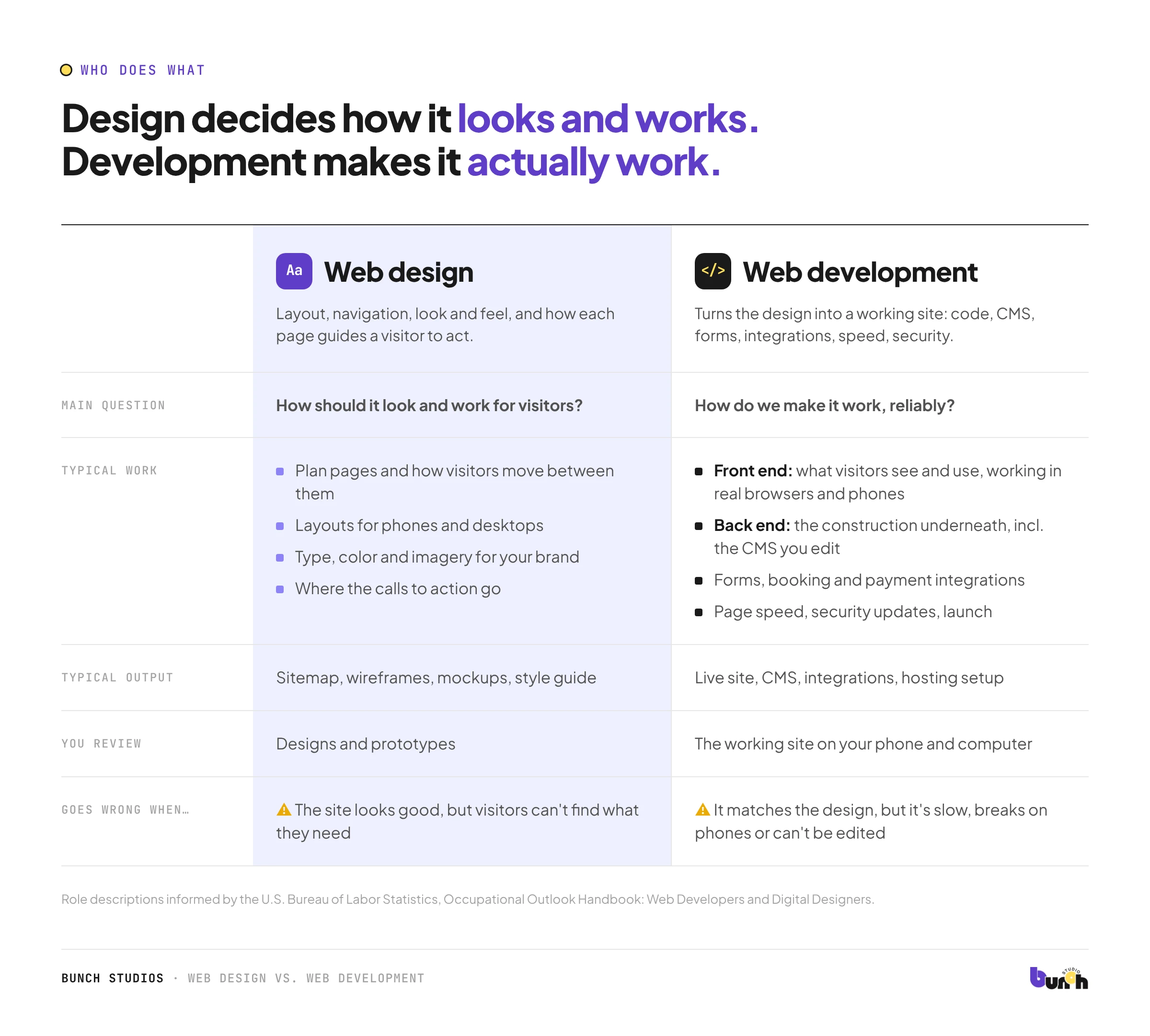
| Web design | Web development | |
|---|---|---|
| Main question | How should it look and work for visitors? | How do we make it work, reliably? |
| Typical output | Sitemap, wireframes, mockups, style guide | Live site, CMS, integrations, hosting setup |
| You review | Designs and prototypes | The working site on your phone and computer |
| Goes wrong when… | The site looks good but visitors can't find what they need | The site matches the design but is slow, breaks on phones or can't be edited |
Where projects go wrong: the handoff
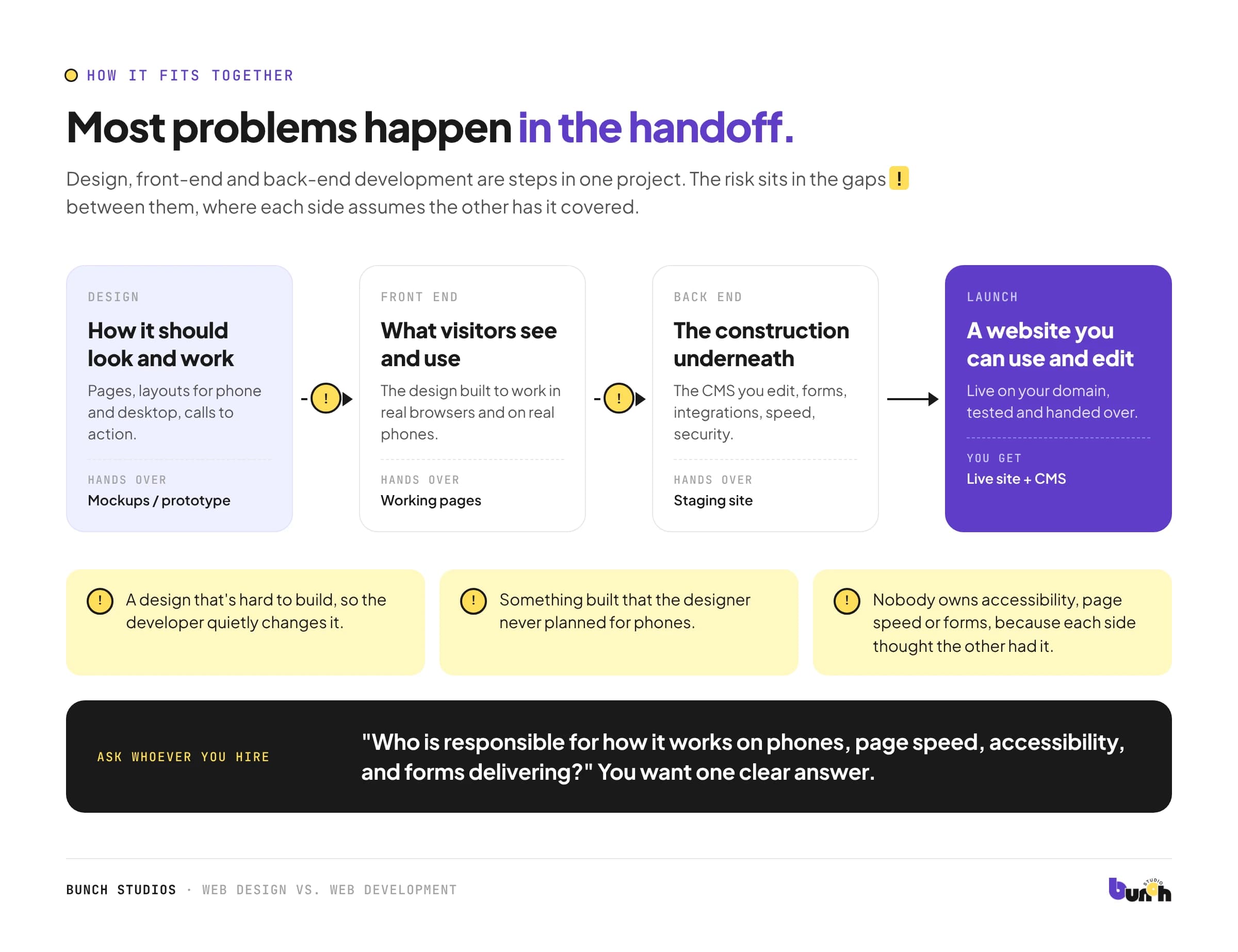
Most problems on small business sites happen between design and development:
- a design that's hard to build, so the developer quietly changes it
- a developer building something the designer never planned for phones
- nobody owning accessibility, page speed or form delivery, because each side thought the other had it
That's why who covers what matters more than job titles.
What about website builders and AI tools?
Builders like Squarespace, Wix and Shopify combine both roles in one product: you pick a designed template and the platform handles the technical side. AI tools can now generate layouts and code drafts too. Neither removes the decisions: someone still has to plan the pages, write the content, check it works on phones and connect your tools. Our website builder vs. custom website guide helps you decide whether a builder is enough.
Who should you hire?
| Your situation | Usually the right fit |
|---|---|
| You'll build it yourself on a builder and just want it to look professional | A designer, or a good template |
| You already have a design and need it built | A developer |
| You need a new site from scratch, with a CMS and integrations | A studio or freelancer who covers both, or a designer and developer who've worked together before |
| You have a working site that looks or works badly | A redesign covering both. See our redesign cost guide |
Questions to ask before you hire
- Who is responsible for how the site works on phones, page speed, accessibility and form delivery?
- Will the person who designs it be involved while it's built?
- What will I be able to edit myself after launch?
- Who owns the design files, code and domain when the project ends?
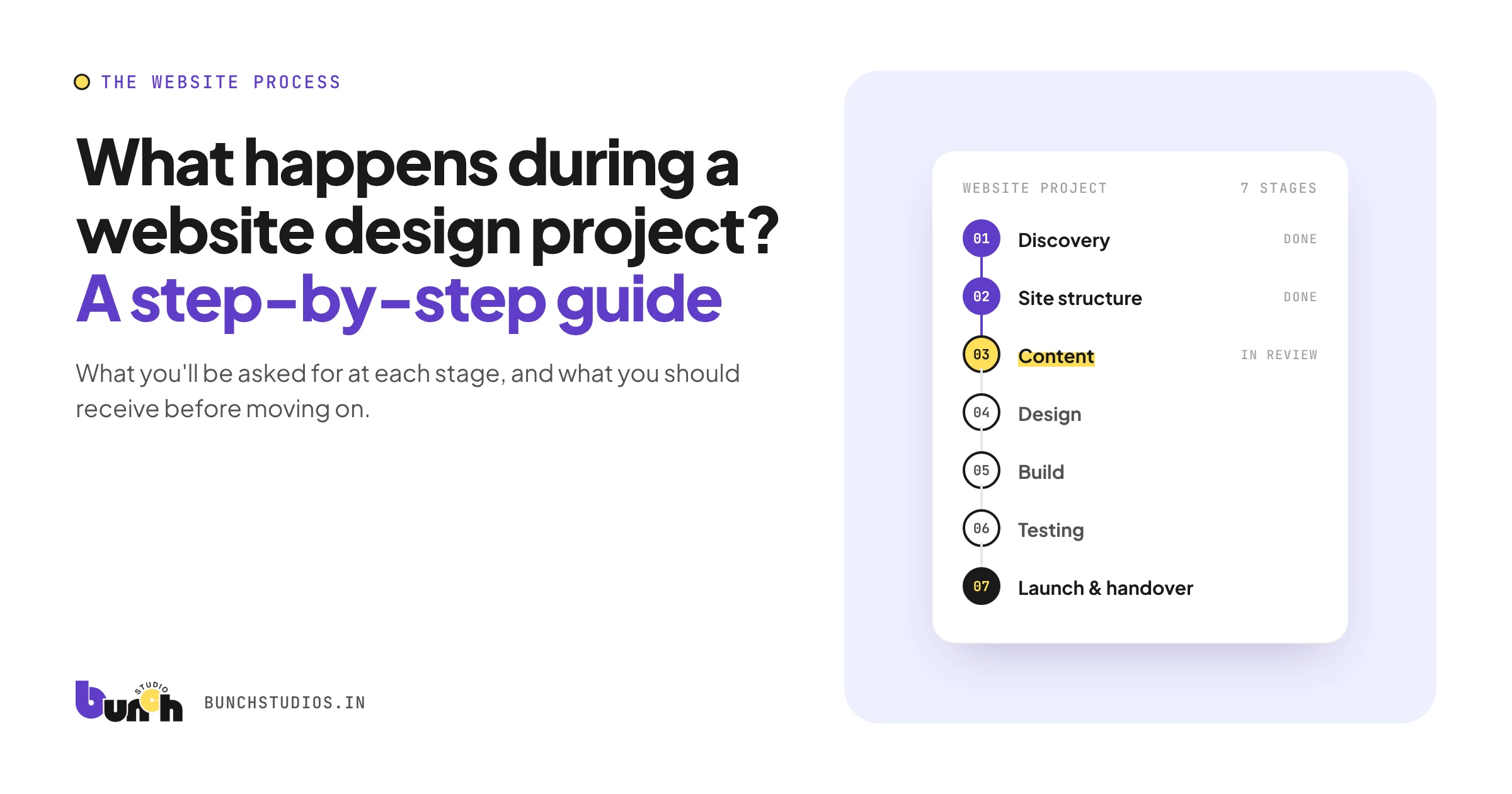
You want one clear answer to each. For what happens at each stage of a project, see the website design process.
How Bunch Studios handles both
Bunch Studios designs and develops custom websites for US small businesses, consultants and solo founders, covering the front end and back end, including a custom CMS built around what you need to edit. Design and development happen in one team, so there's no handoff between separate vendors.
You review the designs and then the working site at set points, and you get the scope, price and timeline in writing before work starts.
Request a Scoped EstimateHow we made this guide: researched and drafted with AI assistance and checked against the BLS source linked above.
Sources: U.S. Bureau of Labor Statistics, Occupational Outlook Handbook: Web Developers and Digital Designers, checked Oct 13, 2026