Custom Website Development: What Small Businesses Actually Need
Custom website development means building a website's code and functionality for your business specifically, instead of assembling it from a template or a platform's ready-made parts. For a small business, it's worth it when the site has to do something specific (fit how you take bookings, show structured information, connect to your tools) or when you want an editor built around exactly what you change. It isn't worth it just to have "custom" on the label. Many small businesses are well served by something simpler.
What "custom" can mean
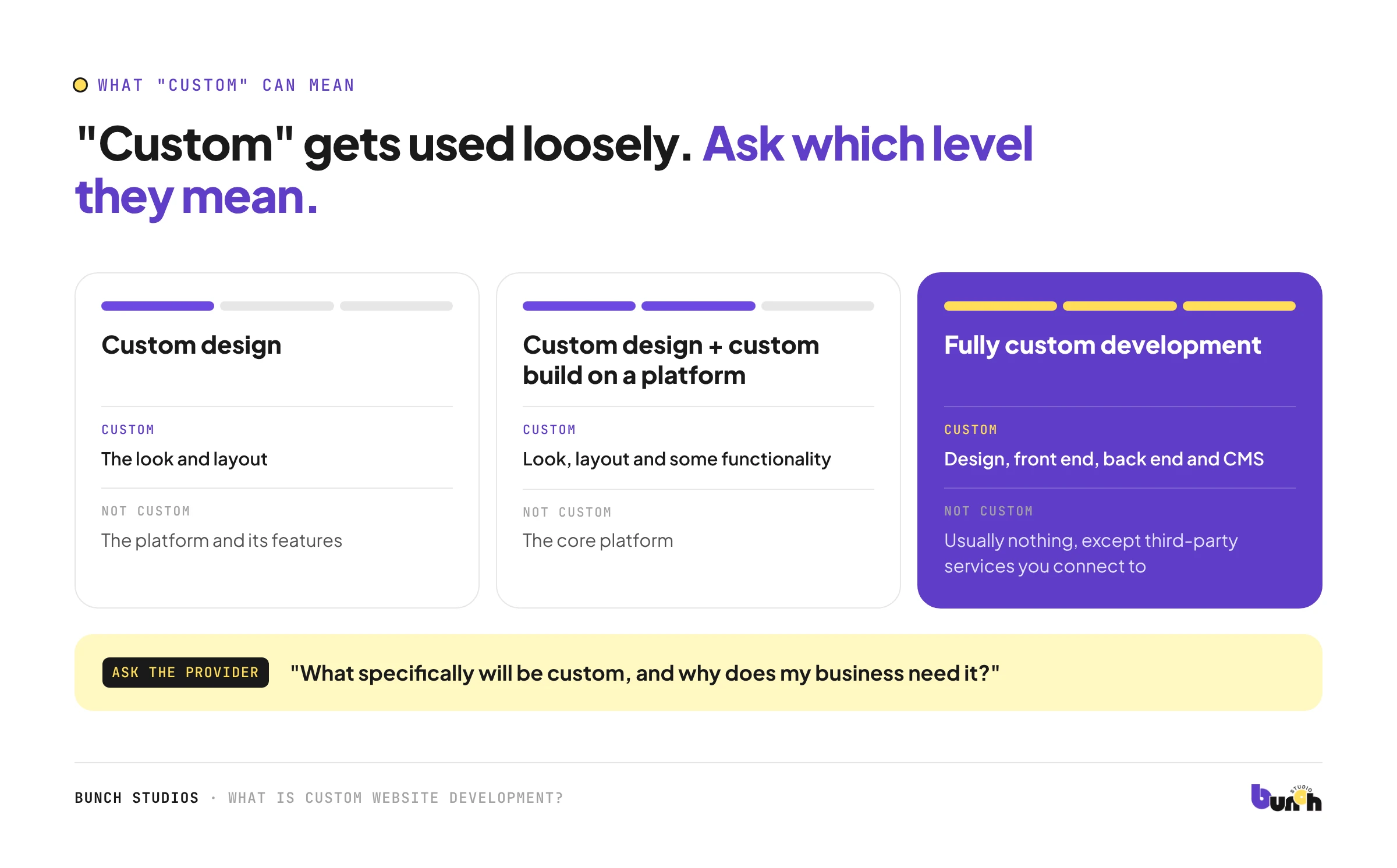
The word gets used loosely. It's worth asking which of these a provider means:
| Level | What's custom | What isn't |
|---|---|---|
| Custom design | The look and layout | The platform and its features |
| Custom design + custom build on a platform | Look, layout and some functionality | Core platform |
| Fully custom development | Design, front end, back end and CMS | Usually nothing, except third-party services you connect to |
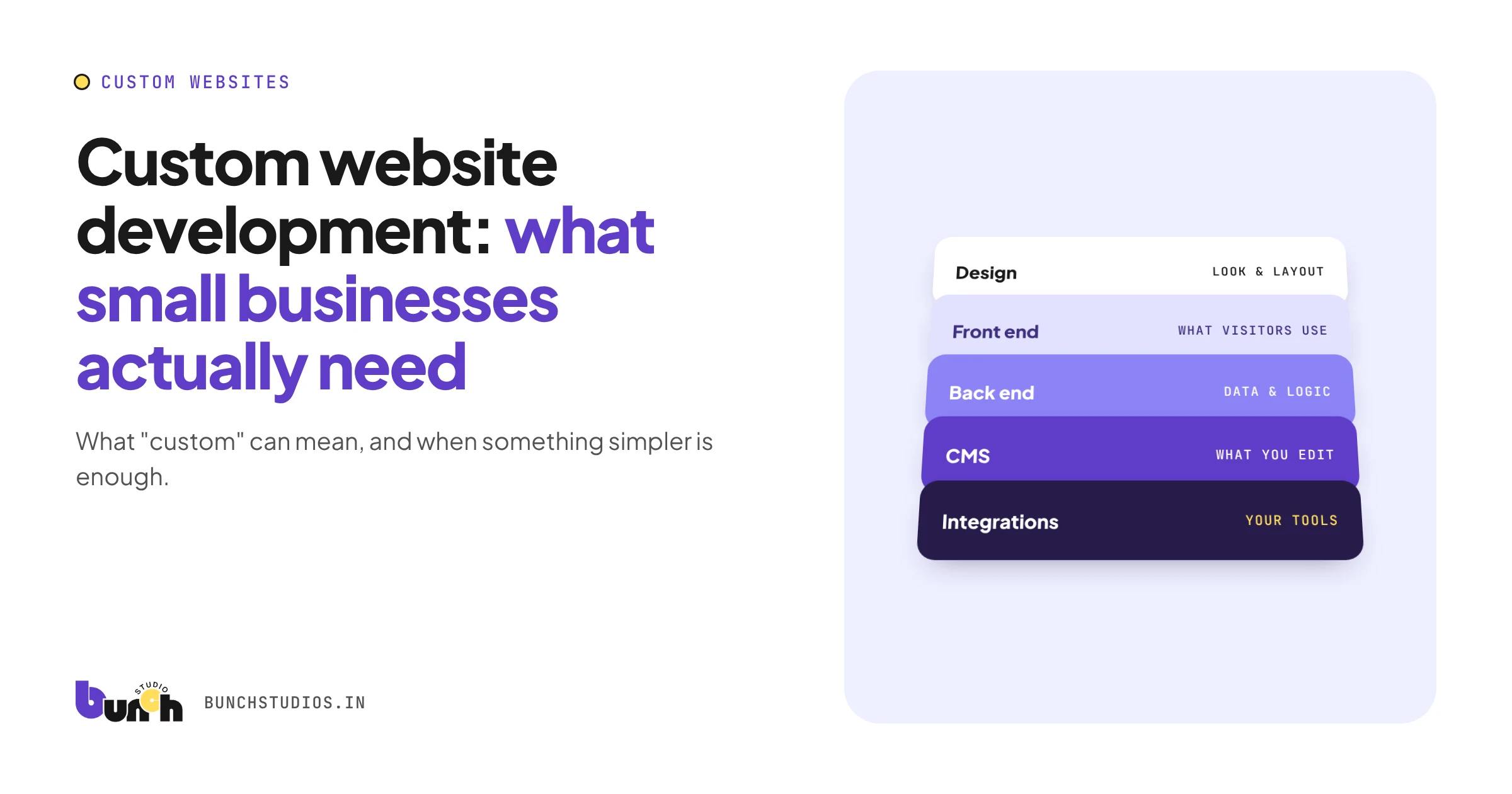
What custom development can include
- Front end: what visitors see and use, built to your design and tested on phones and browsers.
- Back end: the logic and data behind the site, such as how services, locations or projects are stored and shown.
- CMS: an editing system with screens for exactly what you change.
- Integrations: connections to booking, payments, CRMs, email tools or internal systems.
- Performance and accessibility work: built in rather than patched on.
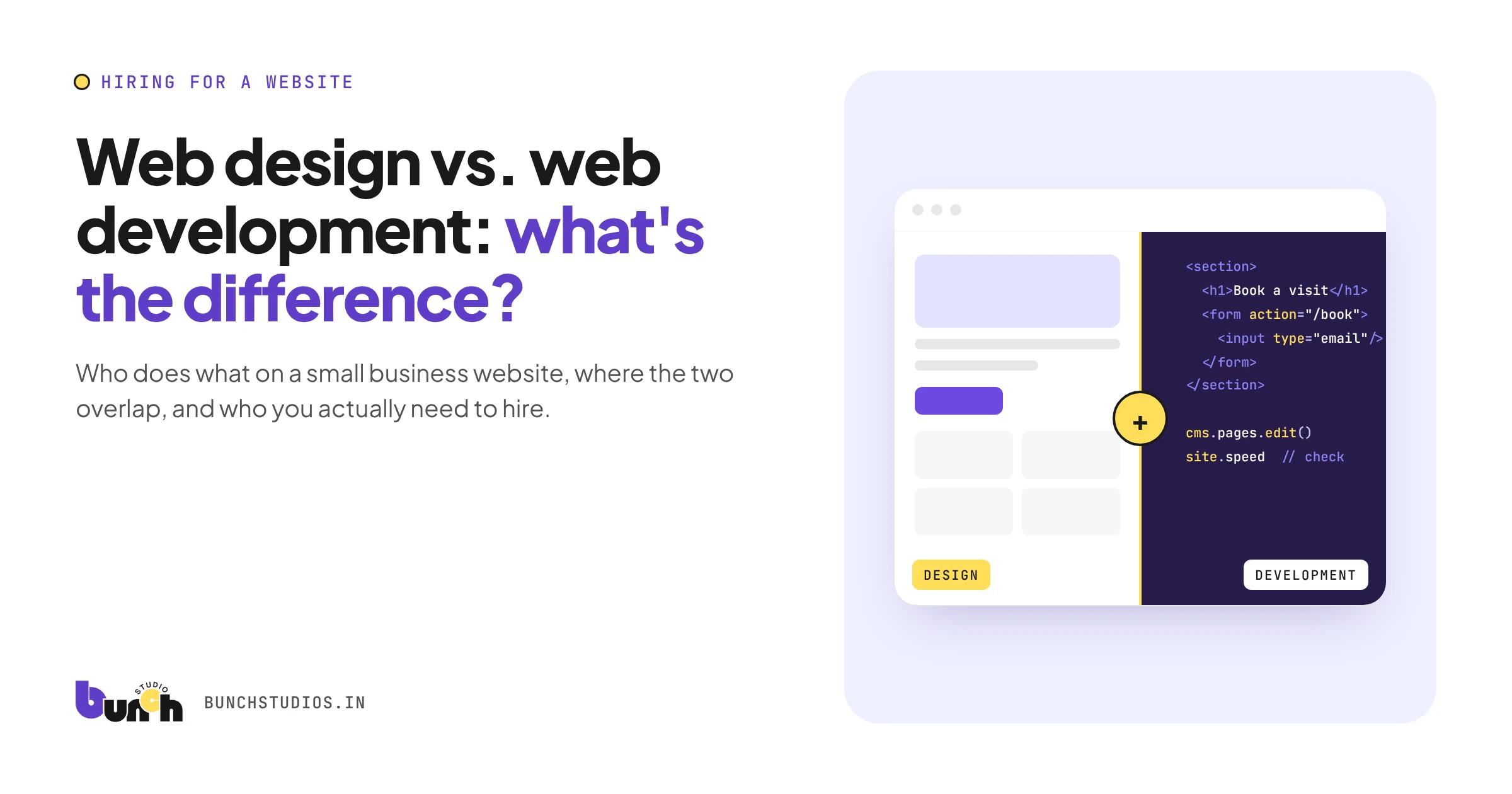
For how design and development split, see web design vs. web development.
When a small business genuinely needs it
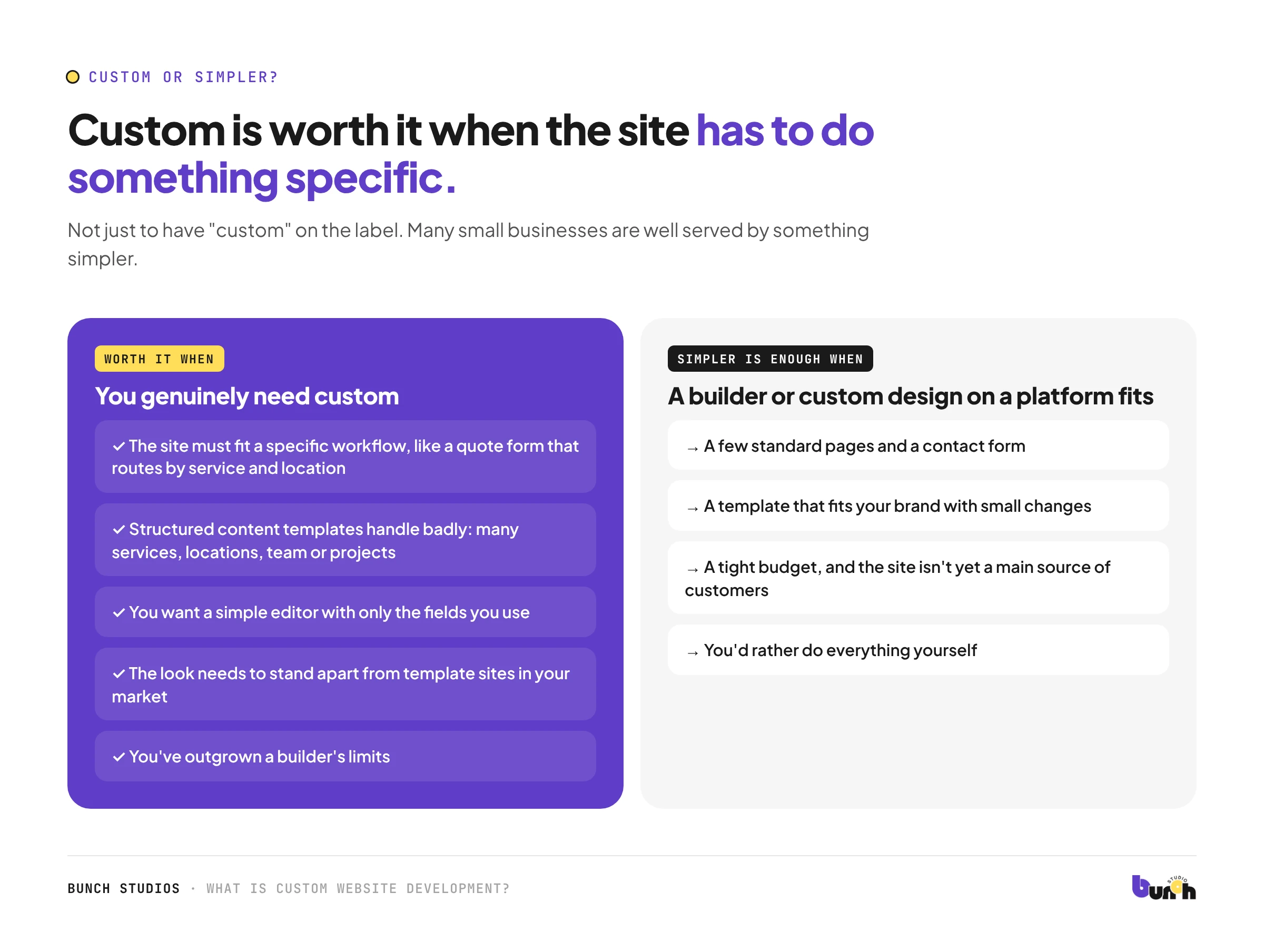
- The site must fit a specific workflow (for example, a quote form that routes requests by service and location).
- You have structured content that templates handle badly (many services, locations, team members or projects).
- You want a simple editor with only the fields you use.
- The look and experience need to stand apart from template sites in your market.
- You've outgrown a builder's limits.
When something simpler is enough
- A few standard pages and a contact form.
- A template that fits your brand with small changes.
- A tight budget and a site that isn't yet a main source of customers.
- You'd rather do everything yourself.
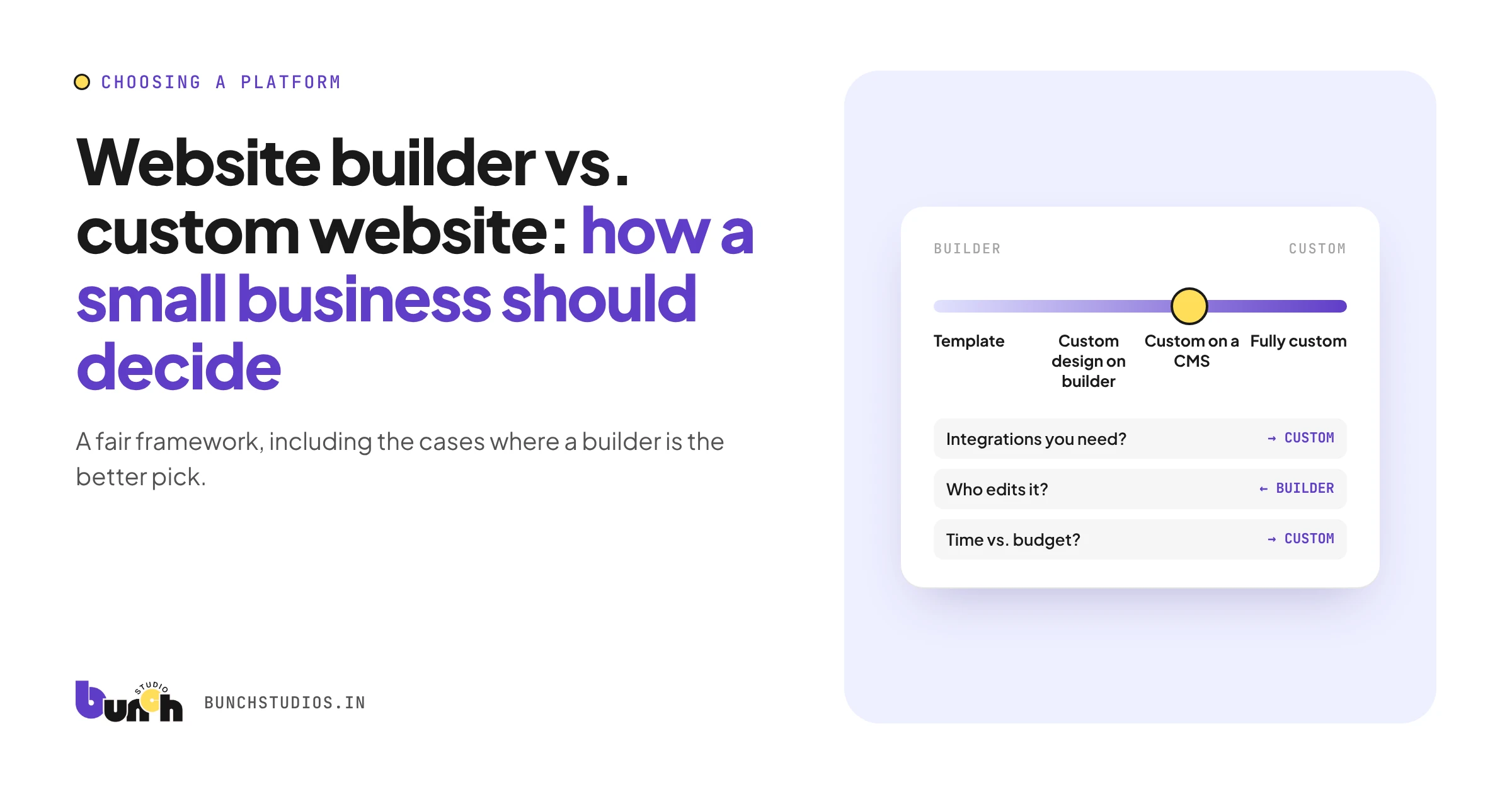
In those cases, a website builder or custom design on a platform is often the better choice. Our builder vs. custom guide has a seven-question self-score.
Two examples (hypothetical)
Hypothetical examples for illustration only.
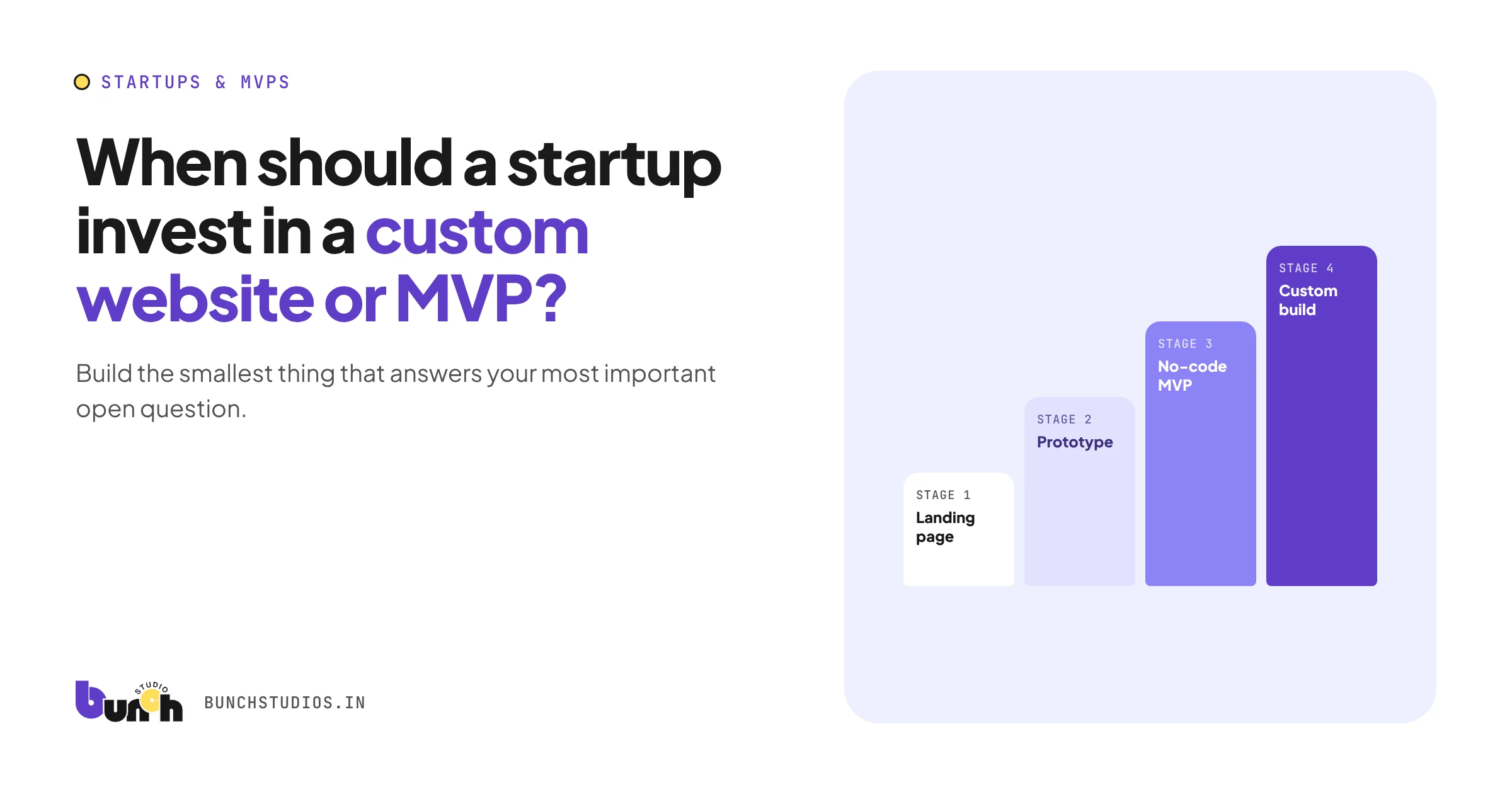
A solo bookkeeper needs five pages, a contact form and a booking link. A template on a builder or an off-the-shelf CMS covers all of it. Custom development would add cost without adding much value.
A home-services company operates in a dozen towns, offers eight services and wants a quote form that sends each request to the right team. It also wants staff to add projects with photos without touching layouts. That's structured content plus a specific workflow, which is where custom development earns its cost.
Is a custom website better for SEO?
Not by default. Google's minimum technical requirements are the same for every site: Googlebot can reach the page, it loads without errors, and it has content Google can index (Google Search Central). A builder site and a custom site can both meet them. What custom development can change is how much control you have over structure, speed and technical settings. Useful content still does most of the work.
The ongoing side of custom code
Custom code doesn't maintain itself. Someone has to apply security updates, fix things when browsers or connected tools change, and make changes to the CMS itself. Before you commit, find out who that will be, what it costs, and whether another developer could pick it up if needed.
What to ask before paying for custom development
- What specifically will be custom, and why does my business need it?
- What will I be able to edit myself? See does your website need a CMS?
- Who maintains the code and the CMS after launch, and what does that cost?
- Will I own the code? Could another developer work on it later?
- How will it be tested on phones, for speed and for accessibility?
How Bunch Studios approaches custom builds
We design and develop custom websites (front end, back end and a custom CMS) for US small businesses, consultants and solo founders. We build around what your business actually needs and what you'll edit, and if we think a simpler option would serve you better, we'll say so in your scoped estimate.
Request a Scoped EstimateHow we made this guide: drafted with AI assistance and checked against the source linked above.
Sources: Google Search Central, technical requirements, checked Oct 13, 2026